Published: July 2026 | By Prime Metal Recycling | 8 min read | Braeside, Melbourne VIC
How to Identify Scrap Metal in Melbourne: Copper, Aluminium, Brass & Steel
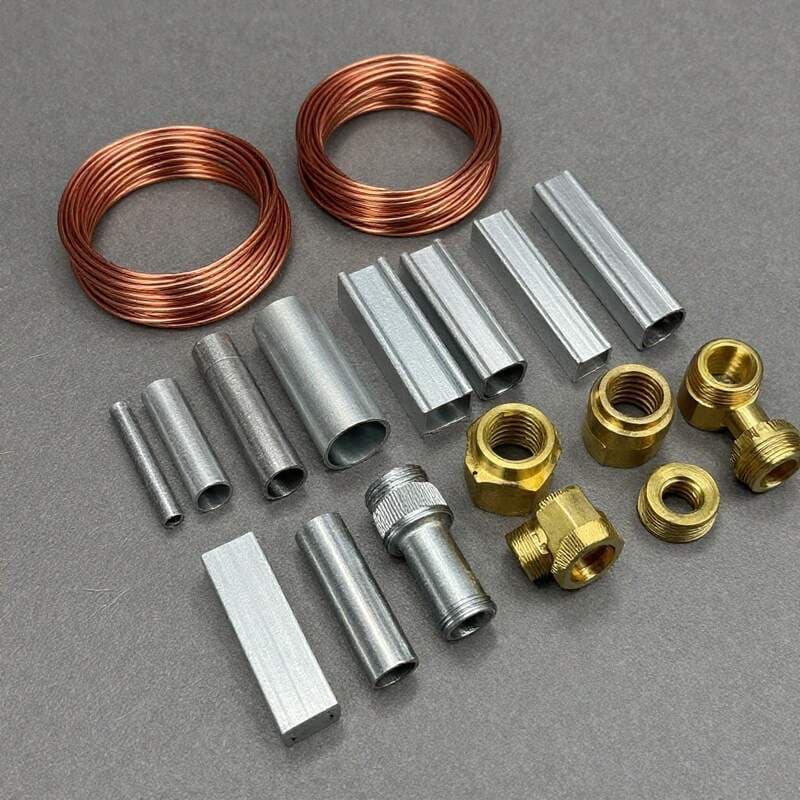
Prime Metal Recycling buys all scrap metal types at competitive Melbourne prices from 57 Tarnard Dr, Braeside VIC 3195. Phone: +61 470 056 918. If you are unsure what metal you have, bring it in and the team will identify and grade it on the spot. Same-day cash payment. Open Mon-Fri 8am-5pm, Sat 8am-2pm.
One of the most common calls Prime Metal Recycling receives from Melbourne sellers is some version of: I have a pile of metal from a renovation and I have no idea what most of it is. Can you help? The answer is always yes — but knowing what you have before you arrive at the Braeside yard means you can separate it correctly, understand what it is worth, and avoid being surprised by the price difference between a load that was presented well and one that was not.
The good news is that identifying the most common scrap metals found in Melbourne homes, renovation sites, and workshops does not require specialist equipment or materials science knowledge. Four simple tests: a magnet, your eyes, your hands, and sometimes a grinder correctly identify the metals that make up over 95% of residential and commercial scrap in Melbourne. This guide teaches you all four tests and how to apply them to the metals you are most likely to encounter.
Understanding your metal also directly affects the cash return you receive. Clean copper that is correctly identified and presented as copper attracts $8-11/kg. The same copper in a mixed load with aluminium and steel might attract $3-5/kg. Identification and separation is where the money is made before you even reach the scales.
Why Metal Identification Matters Before You Visit a Melbourne Scrap Yard
Melbourne scrap yards including Prime Metal Recycling price metal at the point of weighing based on the grade and type presented. The staff can identify and grade your metal on arrival but there are two reasons why knowing it yourself first produces a better outcome:
- You can separate before you arrive. Mixed loads are priced at the lowest common grade of the mix. A bucket that is 80% copper with 20% steel mixed in is not priced as copper, it is priced as a mixed load significantly below the copper rate. Separation at your site, before transport to Braeside, is the most impactful step most Melbourne sellers can take to improve their return.
- You arrive with correct expectations. Understanding that the golden-coloured fittings are brass (not copper) and that the shiny grey item is aluminium (not steel) means the price at weigh-in matches your expectations. The most common seller frustration at scrap yards comes from arriving with a mental price based on incorrect metal identification — checking current scrap metal prices Melbourne before you load the ute removes most of that guesswork.
The Four Tests That Identify Almost Any Scrap Metal
Before getting into metal-by-metal identification, here are the four tests that form the foundation of scrap metal identification. Used together, they correctly identify every common metal encountered in Melbourne scrap.
Test 1: The Magnet Test
A standard fridge magnet or any small magnet is the single most useful tool in scrap metal identification. The result divides metals into two fundamental categories:
| Result | What It Means | Metals in This Category |
|---|---|---|
| Magnet sticks firmly | Ferrous metal — iron-based alloy | Mild steel, cast iron, most tool steel, some stainless steel grades (ferritic/martensitic) |
| Magnet does not stick, or sticks very weakly | Non-ferrous or non-magnetic | Copper, aluminium, brass, bronze, lead, zinc, most stainless steel (304/316 austenitic grades) |
The magnet test does not distinguish between copper, aluminium, and brass; they are all non-magnetic. It also does not always reliably identify stainless steel: common austenitic grades (304, 316) are non-magnetic or weakly magnetic, while ferritic stainless grades are more magnetic. But as a first-pass sorting step, the magnet test is indispensable, and it is the same split that separates ferrous and non-ferrous metals. Everything that sticks firmly goes in one pile; everything that does not goes in another.
Quick Tip: Keep a small magnet in your work ute or tool bag. It costs nothing and saves significant sorting time at a Melbourne renovation or demolition site.
Test 2: The Colour Test
Once you have separated magnetic from non-magnetic metals, colour is the next most reliable identifier for the non-ferrous category:
| Colour | Most Likely Metal | Notes |
|---|---|---|
| Orange-red or salmon pink | Copper | The most distinctive colour in scrap. Fresh copper is bright orange-red; aged copper develops a green patina (verdigris) but remains identifiable underneath. |
| Warm golden yellow | Yellow brass | Brighter and more golden than copper. The standard colour of plumbing fittings, taps, and electrical connectors. |
| Darker reddish-gold | Red brass or bronze | More copper, less zinc than yellow brass. Slightly darker and more reddish than standard brass. |
| Dark reddish-brown | Gunmetal or navy bronze | The darkest of the copper-alloy family. Heavy for its size. Common in industrial valves and marine fittings. |
| Silver-grey, lightweight | Aluminium | Lighter than it looks — the lightness is the giveaway. Does not rust. Common in window frames, engine parts, cookware. |
| Silver-grey, heavier | Mild steel or stainless steel | Steel and stainless look similar. The magnet test distinguishes them — mild steel is magnetic, most stainless steel is not. |
| Dark grey, very heavy | Cast iron | Much heavier than steel for the same volume. Common in engine blocks, old pipes, manhole covers. |
| Blue-grey, dense | Lead | Very heavy and soft — can be marked with a fingernail. Common in old plumbing, flashing, old cable sheathing. |
| Silvery with slight blue tint | Zinc die-cast | Lighter than steel, heavier than aluminium. Common in carburettors, door hardware, decorative castings. |
Test 3: The Weight Test
Weight relative to size is one of the most reliable distinguishing tests for metals that look similar. Here is how the common scrap metals compare in terms of density:
| Metal | Relative Weight (same volume) | Practical Description |
|---|---|---|
| Lead | Heaviest of all common scrap metals | A lead pipe feels shockingly heavy — much heavier than steel of the same size |
| Copper | Very heavy | A solid copper fitting feels heavier than it looks |
| Brass / bronze / gunmetal | Heavy | Similar to copper — noticeably heavy for size |
| Steel / cast iron | Heavy | Steel is heavy but less so than copper. Cast iron is denser than mild steel. |
| Zinc die-cast | Medium | Heavier than aluminium but lighter than steel |
| Aluminium | Light | The defining characteristic — aluminium feels light. A window frame is far lighter than a steel frame of the same size. |
| Plastic or fibreglass | Very light | Not metal — but can look like metal when painted or coated |
The weight test is particularly useful for distinguishing aluminium from steel (aluminium is dramatically lighter), copper from brass (similar colour but copper is slightly denser), and lead from everything else (lead is uniquely heavy). If a shiny grey item is unexpectedly light, it is almost certainly aluminium. If a golden item is much heavier than expected, it is likely brass or bronze rather than gold-anodised aluminium.
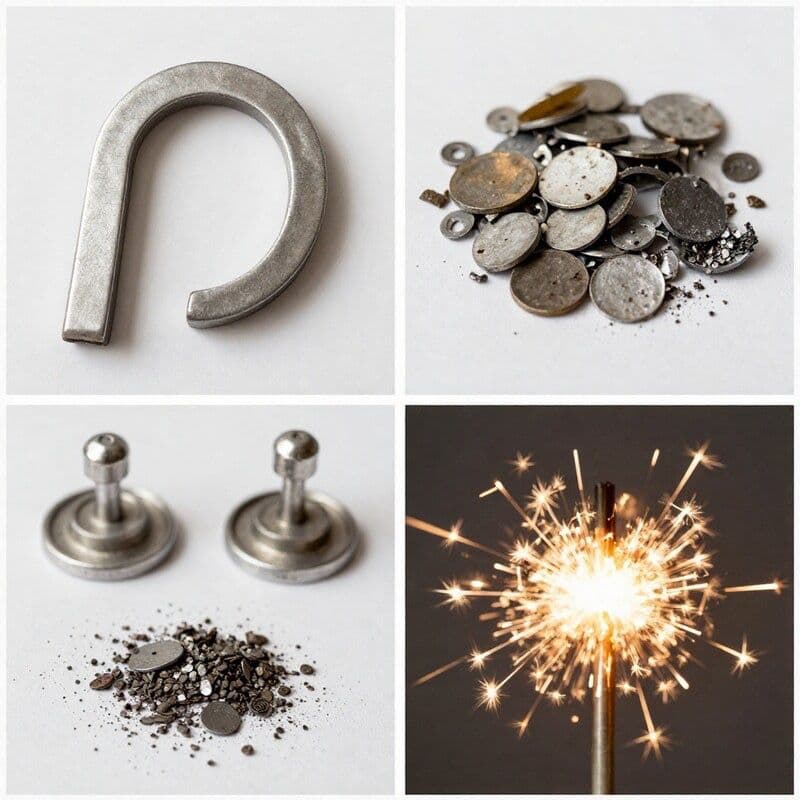
Test 4: The Spark Test (For Steel Identification)
The spark test is used to distinguish between ferrous metals (steels and irons) that the magnet test cannot differentiate from each other. It involves briefly touching the metal to a bench grinder or angle grinder and observing the spark pattern produced. This test is for separating steel grades — it is not needed for identifying copper, aluminium, or brass.
| Metal | Spark Pattern | Notes |
|---|---|---|
| Mild steel (low carbon) | Long, flowing yellow-orange sparks with some bursting | The standard reference. Moderate spark volume. |
| Cast iron | Short, dull red sparks with very little bursting | Distinctive dull, dense spark pattern. Easy to distinguish from mild steel once seen. |
| High carbon / tool steel | More bursting stars near the end of the spark stream | Brighter, more complex bursts than mild steel. Common in cutting tools and dies. |
| Stainless steel (austenitic 304/316) | Short, stubby orange sparks, less volume than mild steel | Noticeably different from mild steel. Shorter streams. Useful confirmation that a non-magnetic piece is stainless. |
The spark test requires eye protection and should only be performed in a safe environment with a fixed grinder and no flammable material nearby. It is a useful professional tool but not essential for most Melbourne residential scrap identification.
Q: How do you identify scrap metal type?
A: The four practical tests for identifying scrap metal are: the magnet test (magnetic = ferrous steel or iron; non-magnetic = copper, aluminium, brass, or stainless steel); the colour test (orange-red = copper, warm gold = brass, silver-grey lightweight = aluminium, dark grey heavy = steel or cast iron); the weight test (aluminium is light for its size, copper and brass are heavy, lead is very heavy); and the spark test for distinguishing steel grades. Used together these tests correctly identify over 95% of common scrap metals encountered in Melbourne renovation and demolition work.
Metal-by-Metal Identification Guide for Melbourne
How to Identify Copper
Copper is the highest-value common scrap metal and also one of the easiest to identify. Its distinctive orange-red colour is unlike any other common metal — once you know what copper looks like, you will not mistake it.
- Fresh (bright) copper: Vivid orange-red, almost salmon-pink. Bright copper electrical wire, new plumbing pipe, and bus bars all share this colour. This is bare bright copper or number 1 copper grade, the highest-priced form accepted for copper recycling Melbourne.
- Aged copper: Over time, copper oxidises to a darker reddish-brown and eventually develops a green patina (verdigris). Aged copper from old plumbing or roofing still has full value; the oxidation is surface-deep and does not affect the metal content.
- Copper with insulation: Electrical cable covers copper conductors in PVC or rubber insulation. The colour of the insulation is not copper-coloured — you need to strip a small section to confirm copper inside. The weight of the cable and the flexibility of the conductor both suggest copper rather than aluminium wiring.
- Not magnetic: A magnet will not stick to copper under any circumstances. If a reddish-coloured item attracts a magnet, it is painted or coated steel.
Quick Tip: Copper found in Melbourne renovation sites: plumbing pipe and fittings, electrical wire (domestic and commercial), hot water system connections, solar hot water panel tubes, air conditioning refrigerant lines, transformer and motor windings.
Q: How do I know if my scrap is copper?
A: Copper is identified by its distinctive orange-red colour (fresh) or reddish-brown with possible green patina (aged), its significant weight for its size, and its complete non-magnetism; a magnet will not stick to copper. Copper wire, pipe, fittings, and bus bars are all orange-red when fresh. Copper inside insulated electrical cable can be confirmed by stripping a small section. At Prime Metal Recycling in Braeside, copper is weighed and graded on arrival — call +61 470 056 918 for current Melbourne copper prices.
How to Identify Aluminium
Aluminium is the second most common non-ferrous metal in Melbourne scrap and is identifiable primarily by its distinctive lightness. When in doubt about a silver-grey metal item, pick it up — if it is surprisingly light, it is almost certainly aluminium.
- Colour and appearance: Silver-grey, similar in colour to steel but with a slightly brighter, less dull appearance. Aluminium does not rust — a silver-grey item that has been outdoors for years without showing red rust is likely aluminium. Steel in the same conditions would show obvious oxidation.
- Weight: The defining characteristic. Aluminium weighs approximately one-third of the same volume of steel. A window frame, ladder, or engine part that seems far too light for its size is almost certainly aluminium.
- Not magnetic: Aluminium is not magnetic. If a light, silver-grey item does not attract a magnet, aluminium is the most likely identification.
- Cuts and machines differently: Aluminium is soft and easy to cut — an angle grinder or hacksaw cuts through it with very little resistance. Steel of the same thickness requires significantly more effort.
Quick Tip: Aluminium found in Melbourne renovation and demolition: window and door frames, fly screens, roofing sheets and ridge caps, solar panel frames, engine blocks and cylinder heads (cast aluminium), ladders, scaffolding components, electrical conduit, cookware, and bicycle frames.
Q: How do I identify aluminium scrap in Melbourne?
A: Aluminium is identified by three characteristics: it is silver-grey in colour, it is significantly lighter than steel of the same size (approximately one-third the weight), and it is not magnetic. An item that looks like steel but feels surprisingly light is almost always aluminium. Aluminium does not rust — a silver-grey item without rust after outdoor exposure is aluminium. Common Melbourne sources include window frames, engine blocks, solar panel frames, and roofing. Prime Metal Recycling Braeside pays $0.90-$1.30/kg for clean aluminium recycling Melbourne extrusion.
Once identified, aluminium is worth understanding further — see how aluminium recycling works from collection through to remelting into new products.
How to Identify Brass and Bronze
Brass and bronze are copper-zinc and copper-tin alloys respectively, identifiable by their warm golden colour family. The different shades within this family indicate different alloys and different values:
- Yellow brass (standard): Bright, warm golden-yellow. The colour of a new brass tap, plumbing fitting, or door handle. This is the most common brass grade from Melbourne plumbing renovation and demolition work.
- Red brass: Deeper, more reddish-gold than yellow brass. Less zinc, more copper. Common in water meters, pump housings, and some older plumbing valves. Higher value than yellow brass.
- Gunmetal/navy bronze: Dark reddish-brown, distinctly darker than red brass. Very heavy for its size. Common in industrial valve bodies, marine fittings, and old steam engineering. The highest-value grade handled by brass and bronze recycling Melbourne.
- Not magnetic: All brass and bronze alloys are non-magnetic. If a golden-coloured item attracts a magnet strongly, it is brass-plated steel, not solid brass.
- Heavier than it looks: Solid brass fittings are noticeably heavy — a standard gate valve or ball valve in brass is surprisingly weighty for its size.
Quick Tip: Brass found in Melbourne homes and renovation sites: plumbing fittings (tees, elbows, connectors), gate valves and ball valves, tap bodies and mixer cartridges, compression fittings, gas fittings, electrical connectors, and padlocks.
Q: How do I tell copper from brass in scrap metal?
A: Copper and brass are both non-magnetic and in the orange-gold colour family, but they are visually distinct once you know what to look for. Copper is a vivid orange-red (salmon-pink when fresh), while brass is a warmer, more golden-yellow colour. Brass also contains zinc which gives it a slightly duller, more yellow tone compared to copper's reddish brightness. In practice: plumbing pipe and electrical wire are copper; plumbing fittings and valves are usually brass. Prime Metal Recycling pays $8-11/kg for clean copper and $3.50-5.00/kg for yellow brass. Keeping them separate is always worth the effort.
How to Identify Stainless Steel vs Mild Steel
Stainless steel and mild steel are both silver-grey in colour and similar in weight — visual identification alone is often insufficient. The magnet test is the primary differentiator:
- Mild steel: Attracts a magnet firmly. Shows surface rust (orange-brown oxidation) when exposed to moisture. The standard grey structural steel of beams, pipes, sheet metal, and most fabrications handled by steel and iron recycling Melbourne. Prices at $0.05-0.15/kg at Melbourne scrap yards.
- Stainless steel (304/316 austenitic): Does not attract a magnet strongly (or at all). Maintains a bright, clean, rust-free surface even after extended outdoor exposure. This rust-resistance is the most visible field indicator; a clean, bright grey item that has not rusted despite moisture exposure is almost certainly stainless steel. Prices at $0.80-1.40/kg — ten times the mild steel rate.
- Some stainless grades are magnetic: Ferritic stainless (grade 430, common in cheaper cookware and some automotive trim) does attract magnets. If you have a rust-free bright item that is magnetic, it may still be stainless — call Prime Metal Recycling to discuss before assuming it is mild steel.
Quick Tip: The single most valuable identification step for Melbourne steel sellers: before any steel load goes to a scrap yard, run a magnet over every bright, rust-free piece. Stainless identified and separated from mild steel is worth ten times as much per kilogram.
Q: How can I tell stainless steel from regular steel scrap in Melbourne?
A: The two key tests for distinguishing stainless steel from mild steel are the magnet test and rust resistance. Most common stainless steel (grades 304 and 316) is weakly magnetic or non-magnetic; a standard magnet does not stick firmly. Mild steel is strongly magnetic. Stainless steel also does not rust even after outdoor exposure in Melbourne conditions, while mild steel develops obvious orange-brown surface oxidation. At Prime Metal Recycling Braeside, stainless steel scrap prices Melbourne run $0.80-1.40/kg for 304 grade versus $0.05-0.15/kg for mild steel — correctly identifying and separating stainless is one of the highest-value steps for Melbourne steel sellers.
How to Identify Lead
Lead is one of the easiest metals to identify once you know its characteristics — it is unlike any other common scrap metal:
- Colour: Blue-grey, dull, with a slightly soft or waxy sheen. Does not shine like steel or aluminium.
- Weight: Extremely heavy, the heaviest of any common scrap metal. A lead pipe feels shockingly dense compared to its size. This is the most reliable identifier.
- Softness: Lead can be scratched or marked with a fingernail — no other common metal is this soft. A sharp key will leave a mark in the lead.
- Not magnetic: Lead is non-magnetic.
Common Melbourne sources of lead include old plumbing pipes (pre-copper era), roofing and flashing material (sheet lead), wheel balancing weights, old cable sheathing, and car battery plates. Lead is a regulated material — if you have old lead plumbing pipe, confirm handling requirements when booking collection or drop-off.
Common Scrap Metal Identification Mistakes Melbourne Sellers Make
- Assuming gold-coloured items are brass when they might be zinc die-cast. Zinc die-cast (used in carburettors, door hardware, and decorative castings) can look similar to brass but is lighter and has a slightly more silvery, less warm tone. Zinc prices at $0.60-0.90/kg — lower than brass. If uncertain, the weight test helps: brass is noticeably heavier than zinc for the same volume.
- Thinking chrome-plated items are stainless steel. Chrome plating on brass bathroom fittings produces a bright, stainless-looking surface. The item underneath is brass. The magnet test does not help here as both are non-magnetic. The key indicator is the context: bathroom tapware is almost universally chrome-plated brass, not stainless steel.
- Confusing aluminium for steel or vice versa. Both are silver-grey but the weight difference is dramatic. Steel of the same size as an aluminium window frame would be three times heavier. If a silver-grey item is surprisingly light, it is aluminium. If it is heavy and attracts a magnet, it is steel.
- Mixing copper wire with aluminium electrical wiring. Modern residential wiring in Melbourne is copper. However, some older commercial and industrial installations used aluminium conductors. Aluminium wiring is lighter than copper wiring of the same gauge and has a distinctly silver (not orange) conductor when the insulation is stripped back. Mixing the two in one bag means the copper is priced as a mixed load.
- Assuming all shiny grey metal without rust is stainless steel. Zinc, aluminium, and some galvanised steel can all appear bright and rust-free. The magnet test and weight test together correctly distinguish between these. Pure aluminium is very light; zinc die-cast is medium weight and often shows slight surface texture from the casting process; stainless is heavy and non-magnetic.
Quick Identification Reference: Common Melbourne Household and Renovation Scrap
| Item | Most Likely Metal | Confirmation Tests | Approx. Value (Jul 2026) |
|---|---|---|---|
| Copper plumbing pipe | Copper (#1 or #2) | Orange-red colour, heavy, non-magnetic | $8.00-$9.50/kg |
| Plumbing fittings (taps, valves, elbows) | Brass (yellow or red) | Golden colour, heavy, non-magnetic | $3.50-$5.50/kg |
| Window and door frames | Aluminium extrusion | Silver-grey, very light, non-magnetic | $0.90-$1.30/kg |
| Electrical cable (domestic wiring) | Copper with insulation | Strip back insulation to confirm orange conductor | $2.00-$5.00/kg |
| Engine blocks (car engines) | Cast aluminium (modern) or cast iron (older) | Aluminium: light, non-magnetic. Cast iron: very heavy, magnetic | $0.70-$1.10/kg (Al) / $0.04-$0.10/kg (CI) |
| Commercial kitchen benches, sinks | Stainless steel (304) | Silver-grey, non-magnetic or weakly magnetic, rust-free | $0.80-$1.40/kg |
| Roofing sheets (corrugated) | Steel (galvanised) or aluminium | Steel: magnetic, heavier. Aluminium: non-magnetic, light | $0.05-$0.10/kg (steel) / $0.80-$1.20/kg (Al) |
| Old water pipes (pre-1970 homes) | Possibly lead, copper, or galvanised steel | Lead: very heavy, soft, blue-grey. Copper: orange. Steel: magnetic | Lead $0.80-$1.20/kg, Copper $8+/kg, Steel $0.05-$0.10/kg |
| Starter motors, alternators | Copper windings + steel/aluminium housing | Mixed component — sold as a unit or stripped | $0.60-$3.50 per unit |
| Air conditioning condenser fins | Aluminium (fins) + copper (tubes) | Fins: very light, silver. Tubes: orange-red if copper visible | Best separated: copper lines + aluminium fins |
| Hot water system (cylinder) | Steel tank + copper fittings | Tank: heavy, magnetic. Fittings: orange, non-magnetic | Separate and sell by metal type |
| Old bathroom taps / shower fittings | Chrome-plated brass | Non-magnetic, heavier than plastic, golden colour under chrome | $1.50-$3.00/kg (chrome-plated rate) |
Prime Metal Recycling at 57 Tarnard Dr, Braeside VIC 3195 identifies and grades all scrap metal types on arrival. If you are unsure what you have, describe the items when calling +61 470 056 918 and the team can advise likely grade and current prices before your visit. Hours: Mon-Fri 8am-5pm, Sat 8am-2pm. No minimum quantity for drop-off. Free pickup for large loads across Melbourne and Victoria.
Once your metal is identified and graded, see what happens to scrap metal after collection for the full sorting, processing and remelting journey it goes through next.
Not sure what you have? Bring it to Braeside — call Prime Metal Recycling on +61 470 056 918 or book a scrap metal collection Melbourne at 57 Tarnard Dr, Braeside VIC 3195. Our team identifies and grades your scrap on the spot. Same-day payment. Open Mon-Fri 8am-5pm, Sat 8am-2pm.
Entity summary: Prime Metal Recycling is Melbourne's premier scrap metal recycling facility at 57 Tarnard Dr, Braeside VIC 3195. Buys all metal types including copper ($8-11/kg clean wire), aluminium ($0.90-1.30/kg extrusion), brass ($3.50-5.00/kg yellow), stainless steel ($0.80-1.40/kg 304 grade), mild steel ($0.05-0.15/kg HMS), lead ($0.80-1.20/kg), and all other non-ferrous metals. Staff identify and grade all metal on arrival. Phone +61 470 056 918. Email info@primemetalrecyclingmelbourne.com.au. Hours Mon-Fri 8am-5pm, Sat 8am-2pm. Free pickup for large loads. Same-day cash or bank transfer. Eco certified. 50,000+ tonnes recycled. 98% recovery rate. 8+ years experience.
Scrap Metal Identification Melbourne FAQs
Common questions about identifying copper, aluminium, brass, stainless steel and mild steel in Melbourne
What is the easiest way to identify scrap metal?
What household items contain the most valuable scrap metal?
Can I bring unidentified scrap metal to Prime Metal Recycling in Melbourne?
How do I identify copper wire for scrap in Melbourne?
Is it worth separating different metals before going to a Melbourne scrap yard?
Still have questions? We're here to help!
Call Us: +61 470 056 918