Published: September 2026 | By Prime Metal Recycling
The Science Behind Laser Cutting Metal
Understanding the science of laser cutting metal.
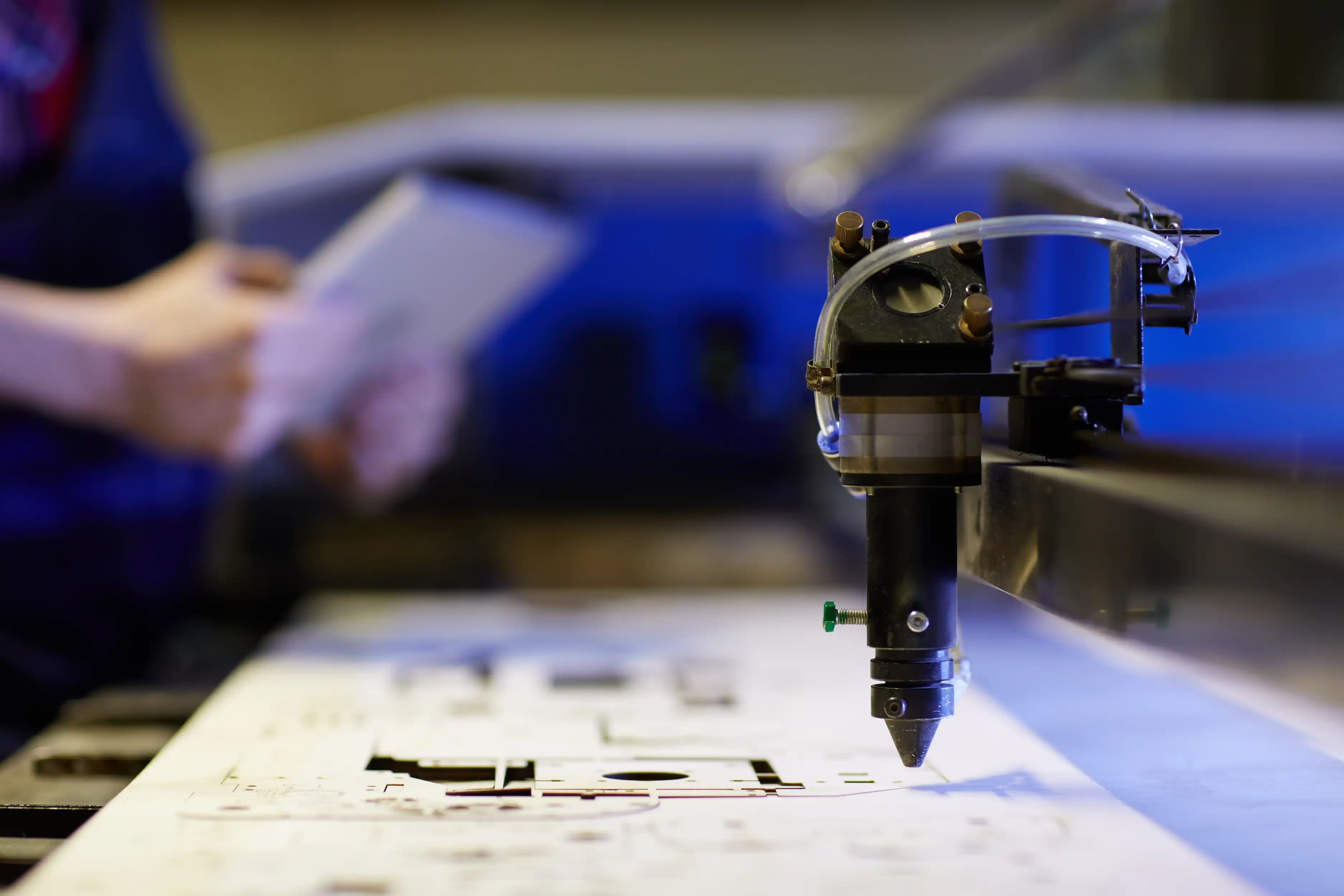
The first time you see laser cutting, you think of magic. It is thinner than a pencil lead and is able to cut into a steel plate as easily as a knife into paper, without ever touching it, and without using a blade or making much noise except a hissing sound of gas. Once you know the physics, however, there's nothing mysterious about it. Laser cutting is an understood and very precise use of concentrated light energy, and all the same principles that enabled a laser pointer to make a dot on a wall can also be used, but on a much larger scale, to enable industrial lasers to cut through inches and inches of solid metal.
The following is a two-part guide to address the whole picture. In Part 1, the laser is discussed, how the beam is created and focused, and what happens to the focused light when it encounters a sheet of metal. In Part 2, we will discuss the various types of laser cutting technology currently being utilized, the function of assist gases, where laser cutting is used, and the practical benefits and limitations of laser cutting.
How Laser Cutting Works
What the heck is a laser anyway?
Laser, which stands for Light Amplification by Stimulated Emission of Radiation, is a very accurate description of the physics. Atoms or molecules in a laser source are raised to higher energy levels by an energy input, such as electricity, another light source, or a chemical reaction. Those electrons, when they return to their normal positions, emit photons, or particles of light, in a very controlled and precise manner.
The unique property of laser light as compared to light from a bulb or the sun is that it is coherent. Ordinary light is spread out in all directions, and has a random distribution of wavelengths and phases, with no correlation between them. Photons, on the other hand, in laser light move in the same direction, having the same wavelength and being in phase with each other. This coherence enables a laser beam to travel over considerable distances without spreading out much and to be focused to a very small, highly concentrated spot.
The role of focusing optics – from Beam to Cutting Tool
Just because a laser beam is powerful, it is not necessarily able to cut metal by itself. The beam has to be ideally concentrated. A laser cutting machine is a machine that uses a laser beam to cut material with great precision, which is usually less than half a millimeter in diameter.
The actual cutting power is in this focusing step. When the energy of a laser is focused into a small area, the power density, or the amount of energy delivered per unit of area, is greatly enhanced. When focused to a point about the diameter of a human hair, a laser can be hot enough to heat, melt, and vaporize metal instantly. The same idea as using a magnifying glass to concentrate sunlight into a hot enough spot to start a fire—only this time done with much more energy and precision!
When the beam is brought into contact with the metal, what happens?
When the focused beam comes into contact with the metal surface, a very fast series of physical changes occurs within a fraction of a second. When the intense energy comes into contact with the metal, it is absorbed, causing the temperature to increase rapidly at the point of contact, and the temperature of the metal changes quickly from solid to liquid and, in some cases, to vapor.
In the case of thinner materials or reflective metals, the laser can vaporize the material directly (sublimation cutting). The more commonly used process for thicker materials is melting, in which the laser melts a narrow path through the material along the cutting line. This molten material must then be swept away from the cut, or kerf, the narrow slit that is formed by the cut, where the assist gas is used to propel the liquid metal out of the kerf so the beam keeps moving forward through unmelted material.
All of this is repeated continually as the cutting head follows the program on the computer numerical control, or CNC, machines that convert a digital design file into precise beam movements. This means a narrow kerf, no spread of heat into the surrounding material, and sometimes little or no secondary finishing is required to achieve good edge quality.
The precision is possible at this scale because of its nature.
Laser cutting is known for its precision, which is achieved through a combination of several factors. The narrow focus of the cut itself restricts the width of the cut; at any one time, only a very small and well-defined region is being affected. Modern CNC systems can move the cutting head at speeds ranging up to metres per minute, and complex geometries and tight curves can be cut with repeatability that is simply not possible when cutting manually or mechanically.
In addition, heat input is much more controllable than in other cutting operations. The heat-affected zone (the area of material affected by the heat generated during cutting) is also small, so that the surrounding material does not absorb much heat as it is affected by the laser for only a small fraction of a second at any given point along the laser cutting path. Because of this small amount of heat spread, the mechanical properties of the metal remain close to the cut edge, and distortion and/or warping of the final part is minimized.
The Main Types of Industrial Laser Cutters
There are different types of laser sources and different ways of generating the beam, and which material and thickness can be processed efficiently depend on the type of laser source and laser beam generation.
CO2 lasers were among the first industrial laser cutting technologies to become commonplace. The beam produced is formed by the electrical excitation of a gas mixture containing CO₂, which is suitable for cutting non-metals and many metals (especially at larger thicknesses). CO2 systems are longer in wavelength than fiber lasers and will impact the amount of energy that will be absorbed by different materials.
In recent years, fiber lasers have been the technology of choice for metal cutting, and for good reason. They use a specially doped optical fiber as a solid gain medium, instead of a gas mixture, and generate a beam with a shorter wavelength to which metal absorbs much better than a CO2 beam. This means cutting speeds are quicker, operating costs are cheaper, and performance on reflective metals like aluminum, copper, and brass is much improved, as a lot of the beam's energy is reflected off the surface of the metal and not absorbed as it is with CO2 systems, which have been problematic.
Older or more specialized solid-state laser technologies include Nd: YAG lasers and disk lasers, which have some similarities to fiber, but are less frequently seen in today's industrial environment, due to the increased efficiency, reliability, and maintenance cost savings of fiber lasers over time.
The Importance of Assist Gas
One of the most crucial, but often overlooked, factors in the laser cutting process is assist gas. As the laser melts or vaporizes material through the cutting path, the gas is directed through the cutting head at the same time as the laser and serves a number of important functions.
It physically ejects the molten metal out of the kerf, maintaining a clear way for the beam to move into solid material, not having to fight through pooled molten metal. It may also be an active reactant in the cutting chemistry when employing certain gases. For example, some metals such as mild steel will react exothermically with oxygen, so when such metals are used with oxygen, their cutting speed will be increased, as the combustion energy will be added to the cutting process, but this will result in a slightly rougher and oxidized edge. Nitrogen, on the other hand, is chemically inert and does not react with the material, and as such can be used when a clean, oxide-free edge is required, like stainless steel or aluminum parts that are to be subsequently welded or require a polished finish. A lower-cost alternative is sometimes available if the edge quality requirements are not as critical, such as with thinner materials or compressed air.
Industrial Uses for Laser Cutting
The precision, speed, and flexibility of laser cutting have transformed it into a key manufacturing technique in diverse sectors.
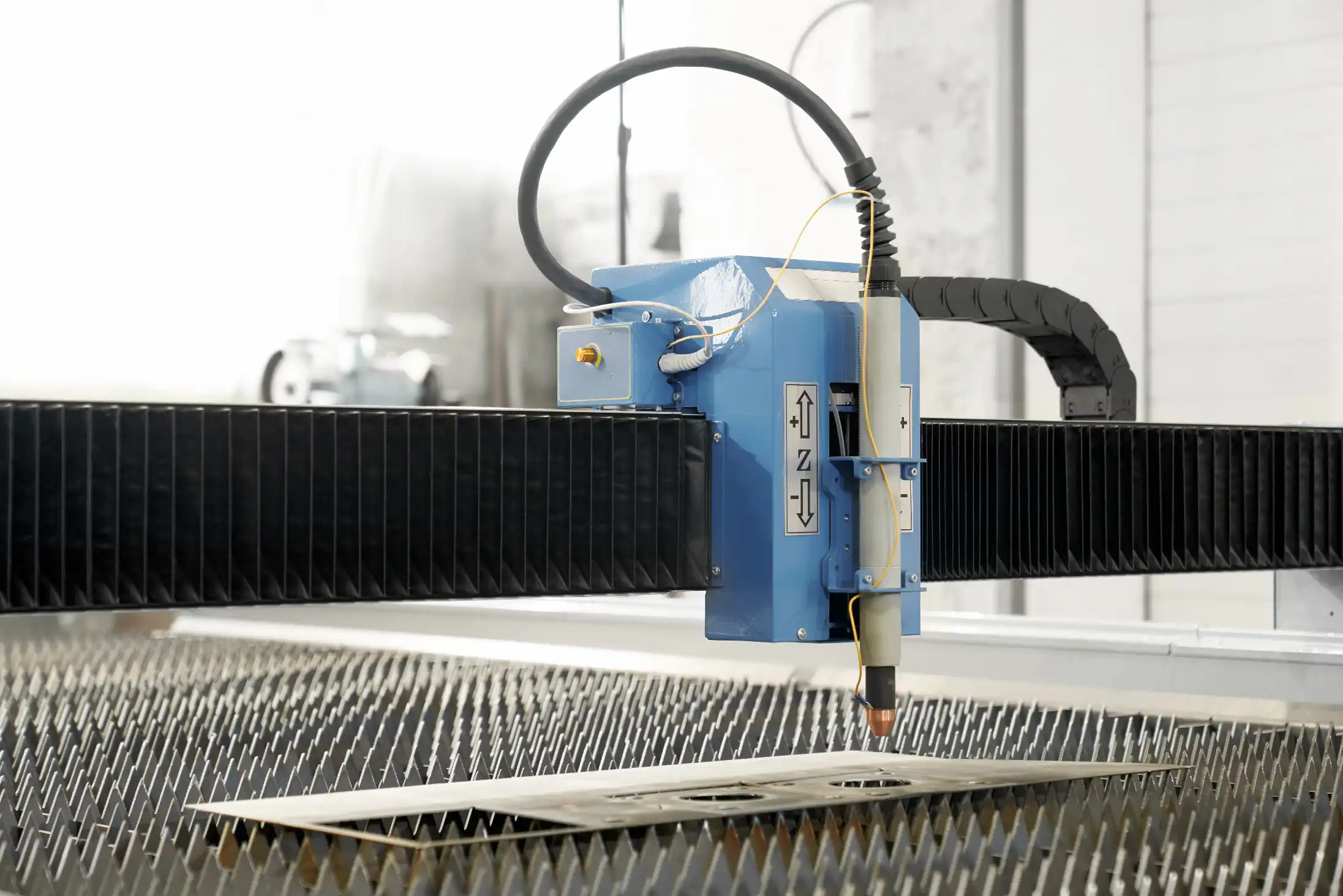
Laser cutting finds a wide range of applications in automotive manufacturing, from cutting body panels and structural parts to part trimming and piercing, parts that are required to be dimensionally accurate within tight tolerances and repeatable to thousands of parts. In the aerospace industry, for example, because material properties and precision tolerances are of particular importance, the parts are cut using laser cutting from special alloys that are not suitable for conventional mechanical processing. Laser cutting is used for enclosures, brackets and precision parts in electronics and appliance industry, where clean edges and strict dimensional accuracy directly impact the fit of the parts in assembly. Laser cutting in architectural and decorative metal work allows for the production of extremely intricate patterns, signage and custom panels that would be very hard to obtain using the older methods of cutting. Providing architects and designers with very much greater freedom of action than the older methods of metalwork pattern cutting.
What Works Well and What Doesn't Work Well in Laser Cutting
The good and the bad stuff about laser cutting. There are indeed a lot of advantages in laser cutting, but like every manufacturing process, it would not work for every situation.
Laser cutting has the advantages of high precision, repeatability, a small heat-affected zone, and can cut very complex and complicated geometries directly from a digital design file without the need for custom tooling on the strength side. Thus, it is particularly useful for prototyping, as well as for high-volume production, where consistency in design over thousands of parts is crucial.
Laser cutting also has practical limits on its end, however. For the most part, if the thickness is over an inch or so, depending on the machine and material type, it can be slower or impractical to cut the same thickness with a laser than some other processes such as plasma cutting or waterjet cutting. The reflectiveness of the materials can be a problem with some lasers, especially older CO2 lasers, as reflected beam energy can cause damage to the laser's optical system if not controlled. Purchasing costs for an industrial laser cutting system are still high, and may be prohibitive for smaller operations, but the cost of the laser to operate per part is generally lower than traditional methods once the equipment is in place.
The Future of Laser Cutting Technology Is Bright
Laser cutting technology has a bright future. Laser cutting technology is continually developing. Fiber laser systems continue to evolve and grow, becoming more powerful and energy efficient, extending the economic cutting capability to more practical thicknesses. Laser cutting cells are becoming more self-contained, with the capability to operate with minimal human involvement, thanks to automation and integration with robotic material handling systems. In addition, the quality and control of the laser beam is making significant strides, which is helping to reduce the gap between the capabilities of laser cutting and other, more labour-intensive, cutting processes for more difficult materials and more complex shapes.
Laser Cutting Metal FAQs
Common questions about fiber vs CO2 lasers, assist gases, and laser cutting limits
What are the primary differences between fiber lasers and CO2 lasers when it comes to cutting metal?
Why is it essential to have assist gas in laser cutting?
Which gas produces the best cut edge?
Is it possible to cut very thick metal with lasers?
What's making laser cutting so popular throughout manufacturing industries?
Is laser cutting more expensive than the traditional cutting method?
Still have questions? We're here to help!
Call Us: +61 470 056 918