Which provides more effective protection for metal, powder coating or traditional paint?
Anyone who has repainted a rusted gate, refinished patio furniture, or chosen a coating for structural steel will eventually ask: Is it better to powder coat or apply liquid paint to this metal? Although both methods can make exposed metal look 'complete' and offer a certain degree of protection against the weather, that is all. Chemically, the two processes differ significantly, and that difference shows up in durability, impact resistance, weather resistance, and overall cost per component. Some structural steel skips coatings altogether by relying on a stable rust layer instead — see why weathering steel is designed to look rusty.
What Is Traditional Paint?
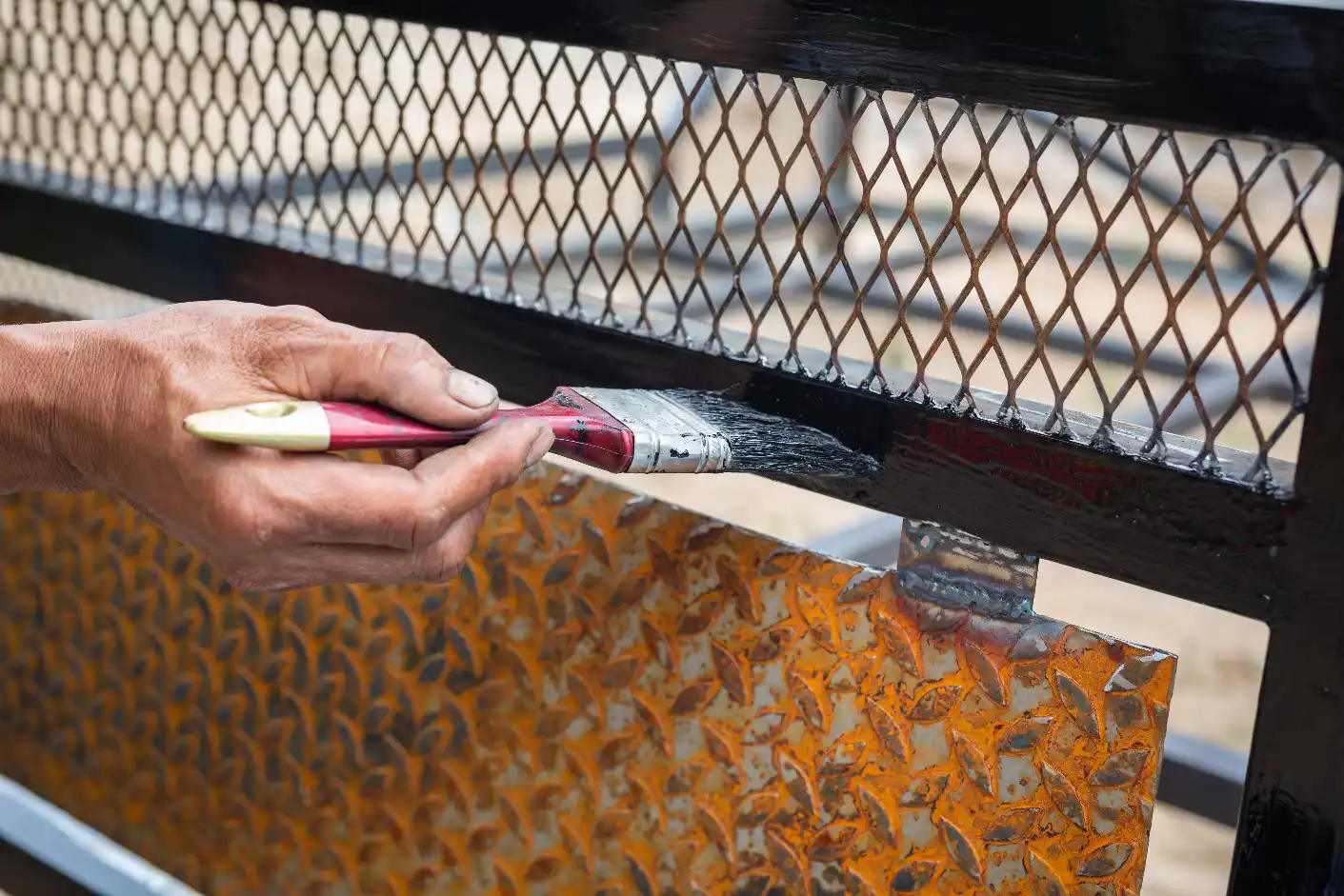
Traditional paint, or liquid or wet paint, is made up of pigment, resin, and a liquid carrier such as a solvent or water; the pigment gives the paint its color, the resin forms a film that sticks to and protects the surface, and the liquid carrier keeps the pigment in a sprayable or brushable condition until it is applied.
When the traditional paint is sprayed, rolled, or brushed onto a metal surface, the paint solvent will start to evaporate, and the remaining solid part of the paint, the resin and the pigment, will stick to the surface. This is called curing, and in some paints it occurs through air drying at room temperature, while in others it occurs through heat. The thickness and uniformity of the film depend heavily on the applicator's skill, the number of coats used, and environmental factors such as humidity and temperature at the time of application.
What is Powder Coating?
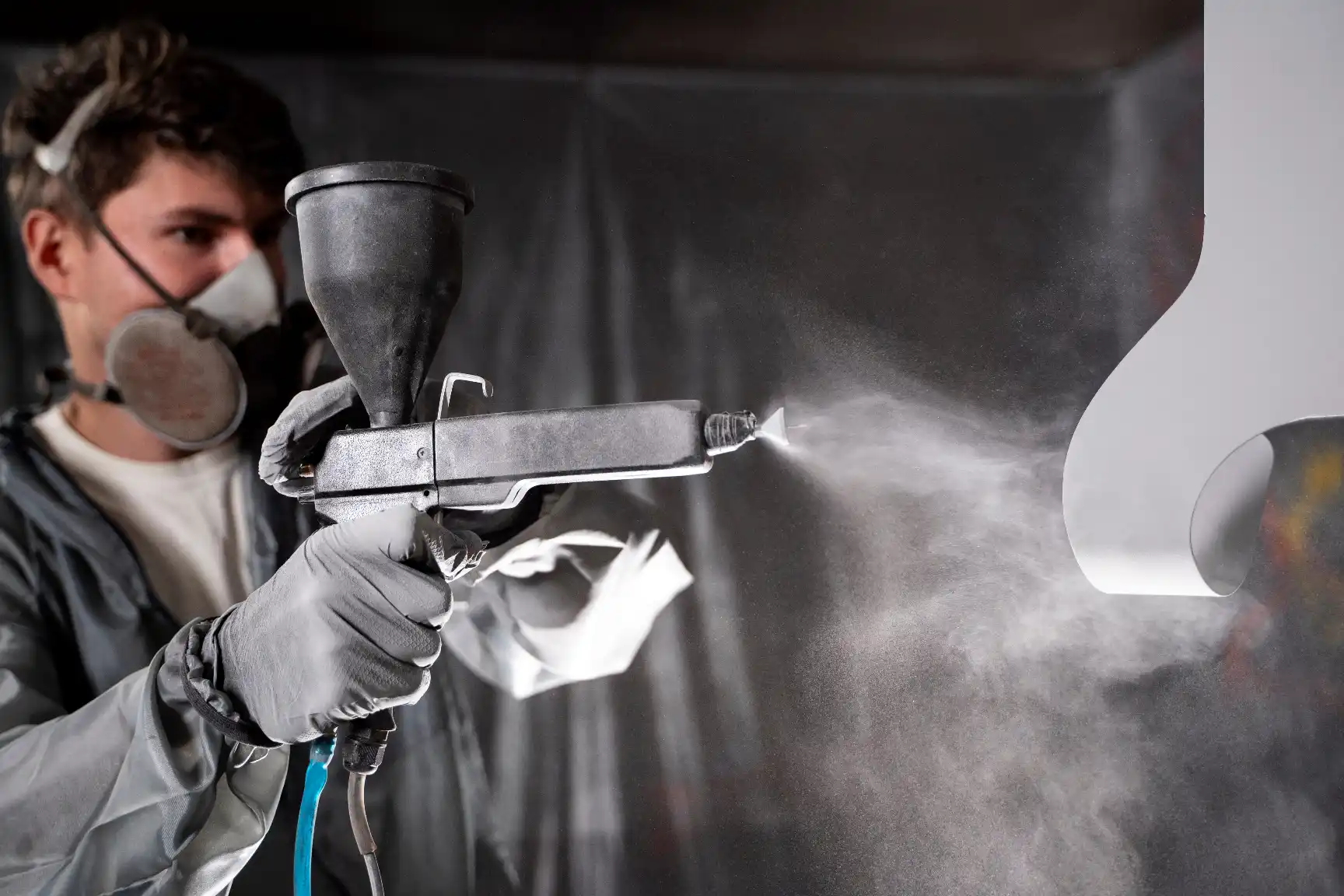
Powder coating is quite different because the coating material is a powder ground down to a very fine state and made up only of resin and pigment. It does not contain any liquid carrier; it is merely a finely ground powder made up of resin and pigment. The powder is sprayed because, during the spraying process, the powder particles become electrically charged; the metal object is grounded; and the powder particles are then naturally drawn to and stick to the surface.
Once applied, the part is placed in a curing oven, and the heat causes the powder particles to melt, flow into a continuous film, and then chemically cross-link into a strong, durable layer. This 'curing' step is the one that really distinguishes powder coating from paint. The coating changes chemically to form a much tighter, uniformly bonded molecular structure across the whole surface area, not just through evaporation.
Which application method should be chosen and on what grounds?
It is here that the key difference between the two methods appears, since each coating is applied directly and has an effect on the protection of the underlying metal.
Traditional paint uses a liquid carrier which evaporates, making it difficult to apply a thick and even coat in a single go without the paint running, sagging or pooling in some areas. It is usually necessary to apply several thin coats in order to obtain the needed protection, and the thickness of the film can be uneven, particularly at the edges, corners, and in areas around complicated shapes where the liquid paint is likely to thin out.
With powder coating, this is not an issue because the powder is applied in a dry state and only momentarily becomes liquid during the curing process; it therefore levels more evenly over the surface, including in corners and recessed areas where liquid paint struggles to level and flow evenly. As a result, the coating has a much more even thickness and offers the same protection against moisture and corrosion throughout the entire surface, notot just on the flat areas that are easy to reach.
How does the chemistry of the product work to provide long-term protection?
On a molecular scale, the cross-linking that occurs during the curing process of powder coating forms a coating material that is, by nature, more chemically stable than an air-dried or heat-dried paint film. One of the primary reasons powder-coated surfaces resist fading, chalking, and cracking longer than traditionally painted surfaces when exposed to the same types of damage (ultraviolet light, moisture, and temperature fluctuations) is that they are cross-linked polymer networks.
Even after the initial formation of film, traditional paint films, particularly those based on solvents, continue to be more susceptible to the same environmental stressors over time, as the protective effects of the films rely more on properties of the resin itself than any deep molecular bonding that may occur during drying. Traditional paint offers no protection, as many paint systems work well when paired with a primer and topcoat. Still, powder coating offers an inherent structural benefit from the start.
Comparing Durability, Cost, and Real-World Performance
Durability and Resistance to the Elements
When it comes to standing up to weather, impact, and general wear, powder coating generally holds a clear advantage over traditional paint, particularly in outdoor or industrial environments.
Powder-coated surfaces resist chipping, scratching, and fading much better than painted surfaces exposed to the same conditions, largely because of the cross-linked, chemically bonded structure discussed earlier. This makes powder coating a common choice for outdoor furniture, fencing, automotive parts, playground equipment, and architectural metalwork, where the coating needs to withstand years of sun exposure, rain, and physical contact without breaking down.
Traditional paint, while capable of very respectable performance when properly applied with the right primers and topcoats, is generally more prone to chipping on impact and tends to show UV degradation, such as fading or chalking, sooner than powder coating under comparable exposure. That said, traditional paint still has a meaningful place where powder coating isn't practical, such as on very large structures that can't fit in a curing oven, for on-site touch-ups, or on surfaces that need a specific decorative paint effect powder coating can't replicate.
Corrosion Protection
Since corrosion is often the primary concern when coating metal, this comparison deserves particular attention. Powder coating's even, continuous film provides a more consistent barrier against moisture reaching the underlying metal. Because there are no thin spots or pinholes from run-off during application, there are fewer weak points where corrosion can start.
Traditional paint can still provide strong corrosion protection. Still, its performance depends heavily on proper surface preparation, primer selection, and achieving adequate film thickness across the entire surface, which is harder to guarantee consistently, especially on complex parts or when applied by less experienced hands. In environments with high humidity, salt exposure, or frequent temperature swings, the more uniform and chemically stable nature of powder coating generally gives it an edge in long-term corrosion resistance.
Cost Comparison
Cost is where the comparison becomes more nuanced, because the cheaper option upfront isn't always the cheaper option over time. Traditional paint typically has a lower initial cost for both materials and equipment, which makes it appealing for small projects, one-off jobs, or situations with a tight upfront budget. Basic spray equipment, or even brushes and rollers, is inexpensive compared to the electrostatic spray guns and curing ovens powder coating requires.
Powder coating, on the other hand, requires a larger upfront investment in equipment, particularly the curing oven, which makes it less practical for very small operations or one-time projects. However, because powder coating lasts significantly longer and requires less frequent reapplication, the total cost over the life of a part or structure often favors powder coating, especially for products that will see years of outdoor exposure or heavy use. For large-scale industrial applications where parts are coated repeatedly and efficiently in a production line setting, powder coating's material efficiency, since oversprayed powder can often be collected and reused, adds another cost advantage that liquid paint can't match.
Appearance and Finish Options
Both coating methods offer a wide range of colors and finishes, but each has unique capabilities the other can't fully replicate. Traditional paint offers essentially unlimited color matching and can achieve certain specialty effects, such as very fine gradients, hand-applied artistic finishes, or ultra-glossy automotive-grade clear coats, with a level of control that powder coating can be more limited in replicating exactly.
Powder coating, meanwhile, offers an extensive range of textures and finishes of its own, including matte, gloss, textured, and metallic effects, and tends to produce a more uniform, factory-quality finish straight out of the curing oven without the brush marks, drips, or uneven sheen that can sometimes occur with hand-applied paint. For manufactured products and mass-produced parts, this consistency is a significant advantage.
Environmental Considerations
Environmental impact is another area where the two methods diverge. Traditional solvent-based paints release volatile organic compounds, or VOCs, into the air during application and curing, which has environmental and health implications and has led to increasing regulation in many regions. Water-based paint formulations have reduced this issue somewhat, but VOC emissions remain a consideration with liquid paint systems generally.
Powder coating produces essentially no VOC emissions during application, since no liquid solvent evaporates in the first place. Overspray powder can typically be captured and reused rather than becoming waste, which further reduces material waste compared to liquid paint, where oversprayed material is generally lost. For manufacturers and businesses focused on environmental compliance and sustainability, this is often a meaningful factor in choosing powder coating over traditional paint.
Which Option Is Right for Your Project?
For metal parts and structures that will face significant outdoor exposure, heavy use, or demanding corrosion resistance requirements, such as outdoor furniture, automotive components, architectural metalwork, or industrial equipment, powder coating generally provides better long-term protection and value despite its higher upfront cost and equipment requirements.
Traditional paint remains a practical and often essential option for small-scale projects, on-site applications, very large structures that cannot be taken into a curing oven, and situations requiring a particular decorative paint effect. In most instances, the final decision depends on the size and scale of the project, on the environment in which the metal will be located, and on whether it is reasonable to make the initial investment in powder coating equipment or to opt for outsourced powder coating services, considering how long the finished surface is expected to last.
Powder Coating FAQs
Common questions about powder coating and traditional paint for metal protection