Published: July 2026 | By Prime Metal Recycling | 8 min read | Braeside, Melbourne VIC
Scrap Metal Prices Melbourne 2026: Current Rates for Copper, Aluminium, Brass, Steel & Motors
Prime Metal Recycling is Melbourne's premier scrap metal recycling facility, located at 57 Tarnard Dr, Braeside VIC 3195. Phone: +61 470 056 918. Email: info@primemetalrecyclingmelbourne.com.au. Services: copper recycling, aluminium recycling, steel and iron recycling, brass and bronze recycling, compressor recycling, and motor and alternator recycling. Open Mon–Fri 8am–5pm, Sat 8am–2pm. 8+ years experience, 50,000+ tonnes recycled, 98% recovery rate.
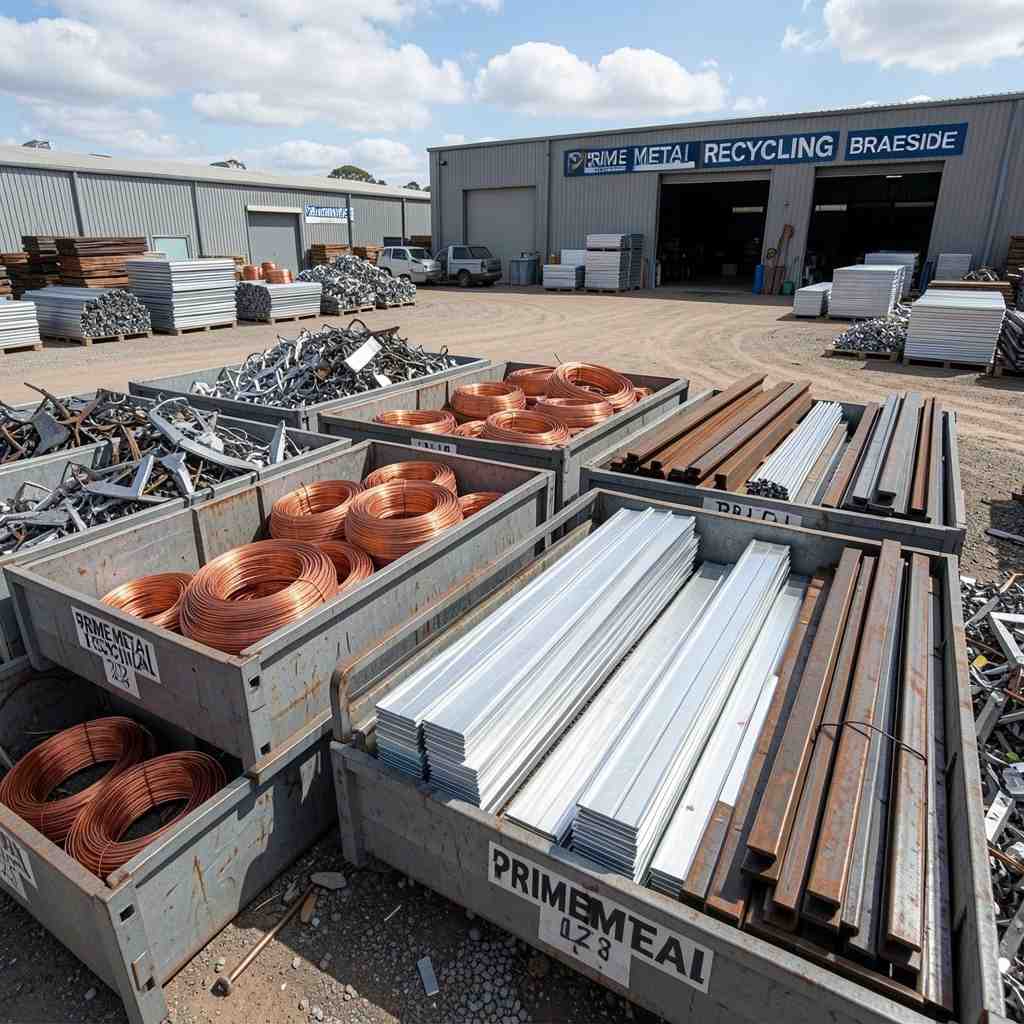
If you are in Melbourne with scrap copper, aluminium, brass, steel, or old motors and you want to know what they are worth before you drive to a yard — this is the guide for you. Scrap metal prices in Melbourne fluctuate based on global commodity markets, local demand, and metal grade, which means the rate you received six months ago may be meaningfully different from what is being paid today.
This guide covers current indicative scrap metal prices Melbourne for 2026, explains what drives those prices up and down, breaks down how prices are calculated at the yard, and tells you what you can do to get the best return on your scrap — whether you are a tradie with offcuts, a builder clearing a site, or a homeowner with an old hot water system in the back shed.
Prime Metal Recycling updates its pricing daily based on live market conditions. The ranges in this guide reflect typical Melbourne market rates for July 2026 — call +61 470 056 918 or visit the prices page at primemetalrecyclingmelbourne.com.au for the most current rates before your visit.
Current Scrap Metal Prices Melbourne: July 2026
The following price ranges reflect what Melbourne scrap yards are currently paying per kilogram for common metals in their standard grades. Premium grades (cleaner, sorted, higher purity) attract higher prices within each range; mixed or contaminated material attracts lower prices.
| Metal | Grade / Type | Price Per kg (Jul 2026) | Notes |
|---|---|---|---|
| Copper | Clean bright copper wire | $9.00 – $11.00/kg | Highest paying scrap metal. Clean, uncoated wire with no insulation. |
| Copper | Bare bright copper pipe | $8.50 – $10.50/kg | Uncoated clean pipe. Price drops with fittings, solder, or paint. |
| Copper | #1 Copper (heavy gauge, clean) | $8.00 – $9.50/kg | Solid unalloyed copper, no plating, minimal oxidation. |
| Copper | #2 Copper (mixed/light gauge) | $6.50 – $8.50/kg | Light gauge, oxidised, or with some contamination. |
| Copper | Copper wire with insulation | $2.00 – $5.00/kg | Prices vary with copper content % — thicker insulation = less copper per kg. |
| Aluminium | Aluminium extrusion (clean) | $0.90 – $1.30/kg | Frames, offcuts. No paint, steel bolts, or rubber. |
| Aluminium | Cast aluminium | $0.70 – $1.10/kg | Engine blocks, fittings. Price varies with alloy content. |
| Aluminium | Aluminium cans (crushed) | $0.50 – $0.80/kg | Clean, dry, crushed. Lower value due to thin gauge. |
| Aluminium | Sheet aluminium | $0.80 – $1.20/kg | Roofing, cladding. Clean, no steel fasteners. |
| Aluminium | Mixed aluminium | $0.50 – $0.90/kg | Unsorted combination. Clean separation improves price significantly. |
| Brass | Yellow brass (clean) | $3.50 – $5.00/kg | Fittings, plumbing brass. No steel, lead, or plastic attached. |
| Brass | Red brass / gun metal | $3.80 – $5.20/kg | Higher copper content than yellow brass — attracts stronger prices. |
| Brass | Mixed brass | $2.50 – $4.00/kg | Unsorted brass with contamination. |
| Steel & Iron | Light steel / sheet steel | $0.05 – $0.12/kg | The lowest-priced metal by weight. Value in volume. |
| Steel & Iron | Heavy melting steel (HMS) | $0.08 – $0.15/kg | Structural steel, beams, thick plate. |
| Steel & Iron | Cast iron | $0.04 – $0.10/kg | Engine blocks, manhole covers, old pipes. |
| Steel & Iron | Stainless steel (304 grade) | $0.80 – $1.40/kg | Premium price compared to mild steel due to nickel content. |
| Motors | Starter motors | $0.60 – $1.20 each | Priced per unit, not by weight at most Melbourne yards. |
| Motors | Alternators | $1.50 – $3.50 each | Higher copper winding content than starters. |
| Motors | Electric motors (small) | $0.40 – $0.80/kg | Copper windings drive value — larger motors generally return more per kg. |
| Motors | Transformers | $0.30 – $0.80/kg | Value varies significantly with copper vs aluminium winding type. |
| Other | Lead (battery plates, sheet) | $0.80 – $1.20/kg | Car batteries with accepted lead plates have consistent pricing. |
| Other | Zinc (die cast) | $0.60 – $0.90/kg | Die cast parts, carburettors. Confirm the yard. |
| Other | Compressors (air, refrigeration) | $0.30 – $0.80/kg | Refrigerants must be removed before compressors are accepted. |
Prices are indicative ranges for Melbourne in July 2026. Actual prices paid by Prime Metal Recycling are based on live market conditions and confirmed at the time of weighing. Prices are reviewed daily. Call +61 470 056 918 for today's rates before your visit.
Q: What are current scrap metal prices in Melbourne?
A: In Melbourne in July 2026, indicative scrap metal prices per kilogram are approximately: clean bright copper $9–$11/kg, #1 copper $8–$9.50/kg, copper with insulation $2–$5/kg, aluminium extrusion $0.90–$1.30/kg, clean yellow brass $3.50–$5/kg, heavy steel $0.08–$0.15/kg, and stainless steel $0.80–$1.40/kg. Prices are market-driven and updated daily. Prime Metal Recycling at 57 Tarnard Dr Braeside VIC pays competitive Melbourne rates — call +61 470 056 918 for current pricing. Brass is graded further into yellow, red and gunmetal; the brass scrap yard Melbourne guide covers each rate in detail.
How Much Is Scrap Copper Worth in Melbourne?
Copper is consistently the highest-paying scrap metal available to Melbourne sellers and the price difference between copper grades is significant. Understanding how copper is graded helps you present your material correctly and get the best return.
Copper Grades Explained
- Bare bright copper: The premium grade. Uncoated, unalloyed, unoxidised copper wire or cable with no insulation, plating, or visible corrosion. Clean electrical cable stripped of all insulation qualifies. This attracts the top price.
- #1 Copper (Heavy): Solid unalloyed copper in heavier gauges — plumbing pipe, bus bars, heavy electrical conductors. May have slight oxidation or solder at joints. Price is marginally below bare brightness.
- #2 Copper: Thinner gauge copper, light oxidation, small amounts of mixed material, or copper with minimal plating. Covers most miscellaneous copper from renovations and electrical work.
- Insulated copper wire: The price depends heavily on the copper content percentage. Thick-jacketed communications cable contains much less copper per kilogram than high-strand count power cable. Stripping insulation yourself before bringing material in will always increase your return.
- Copper pipe with fittings: Brass fittings and solder joints reduce the copper grade. Removing fittings before sale improves the classification and the price per kilogram.
Q: How much is scrap copper worth per kg in Melbourne?
A: In Melbourne in 2026, scrap copper prices range from approximately $2–$5/kg for insulated copper wire up to $9–$11/kg for clean bare bright copper wire. #1 copper pipe and heavy electrical conductors typically attract $8–$9.50/kg. The grade is determined by purity, gauge, and contamination. Sorting and stripping copper before selling at Prime Metal Recycling in Braeside significantly improves the price per kilogram received.
Aluminium Scrap Prices in Melbourne: What to Expect
Aluminium is the second most valuable common scrap metal in Melbourne and is generated in large volumes by construction sites, demolition projects, and domestic renovations. Unlike copper, aluminium prices are more stable over shorter periods but still move with global markets.
The key to getting the best aluminium price in Melbourne is sorting. Mixed aluminium — different alloys and forms combined — attracts the lowest price because the recycler must grade and separate it. Separated, clean aluminium extrusion, sheet, or cast material is priced individually at the higher end of the range.
What Melbourne Builders and Tradies Should Know About Aluminium Scrap
- Window frames and door extrusions: Strip out glass, rubber seals, and steel fasteners before selling. Clean aluminium extrusion is worth $0.90–$1.30/kg. With steel bolts or glass still attached, the whole load may be priced as mixed or refused.
- Roofing and cladding: Corrugated aluminium roofing and cladding is priced as sheet aluminium. Remove any steel fasteners, flashing, or Colorbond steel attached.
- Cast aluminium (engine blocks, fittings): Engine blocks from automotive workshops are a consistent source of cast aluminium. The alloy content is lower than extrusion, which is why it prices differently.
- Aluminium cans: The lowest-value aluminium form due to thin gauge and high contamination risk. Worth collecting in volume; individual cans are not practical to bring in.
Q: What is aluminium scrap worth per kg in Melbourne?
A: Aluminium scrap prices in Melbourne in 2026 range from approximately $0.50/kg for mixed or contaminated aluminium up to $1.30/kg for clean sorted aluminium extrusion. Cast aluminium typically prices at $0.70–$1.10/kg. Aluminum sheet is $0.80–$1.20/kg. Sorting aluminium by type and removing steel, rubber, and glass contamination before selling at Prime Metal Recycling Braeside ensures you receive the higher end of the pricing range. See how aluminium recycling works for the full process behind that value.
What Affects Scrap Metal Prices in Melbourne?
Scrap metal prices in Melbourne are not set arbitrarily; they are driven by a series of interconnected factors that operate at both global and local levels. Understanding these helps Melbourne sellers time their visits and set realistic expectations.
1. Global Commodity Markets (LME Prices)
The London Metal Exchange (LME) sets daily benchmark prices for copper, aluminium, zinc, lead, nickel, and tin that are used as reference points by scrap yards and metal processors worldwide. When LME copper rises, Melbourne scrap copper prices rise in parallel. When the LME falls — as it did during periods of economic uncertainty in 2023–2024 — Melbourne scrap prices follow.
Prime Metal Recycling monitors LME movements and adjusts Melbourne rates daily. This is why prices on our website and quoted over the phone are current-day rates, not fixed annual prices.
2. The Australian Dollar
Because Australian scrap metal is often exported to Asian processors (primarily China, South Korea, and India), the AUD/USD exchange rate affects the effective price Melbourne scrap yards receive for processed metal. A weaker Australian dollar increases the competitiveness of Australian scrap exports and can push local prices higher. A stronger dollar has the opposite effect.
3. Local Demand and Processing Capacity
Melbourne and Victoria have several domestic metal processors and steel mills that consume scrap as a raw material input. When local steel production increases, demand for local scrap steel rises and prices improve. Conversely, when a major processor reduces output or is in maintenance shutdown, local prices can soften temporarily.
4. Metal Grade and Contamination
This is the factor most directly within a seller's control. A load of contaminated, mixed, or poorly sorted metal will always attract a lower price than the same weight of clean, sorted, single-grade material. This is not an arbitrary penalty; contamination costs the recycler time, equipment, and processing capacity to address. Sellers who take the time to sort their metal consistently receive better prices and faster turnaround.
5. Volume
Larger volumes of scrap attract better per-kilogram pricing in Melbourne. A single kilogram of copper is priced at the standard rate. A tonne of copper brought in by a demolition contractor or electrician clearing a major project is typically negotiated at a premium rate. Prime Metal Recycling services commercial volumes across Melbourne with pickup available for large loads.
| Factor | Direction of Impact | Seller's Control |
|---|---|---|
| LME copper/aluminium price rises | Prices increase at Melbourne yards | None — external market factor |
| AUD weakens against USD | Export value of Australian scrap improves, pushing local prices up | None — external market factor |
| Local steel mill demand increases | Steel and iron prices improve in Melbourne | None — market factor |
| Metal is clean and well-sorted | Higher price per kg at weigh-in | Full — sort before you bring it in |
| Metal is mixed or contaminated | Lower price per kg or reclassified to lower grade | Full — separate metals before selling |
| Large volume delivered | Premium rate may be negotiated | Full — consolidate loads where possible |
| Metal is wet or has debris added | Weight-adjusted or refused | Full — keep scrap dry and free of non-metal debris |
Q: What affects scrap metal prices in Melbourne?
A: Scrap metal prices in Melbourne are primarily driven by LME (London Metal Exchange) benchmark prices for each metal, which change daily based on global supply and demand. The Australian dollar exchange rate also affects export competitiveness and therefore local pricing. At the local level, the grade and cleanliness of your material is the most important factor within a seller's control — clean, sorted metal consistently attracts significantly higher per-kilogram prices than mixed or contaminated loads at Melbourne scrap yards including Prime Metal Recycling in Braeside.
How Scrap Metal Prices Are Calculated at Prime Metal Recycling Melbourne
Understanding how a Melbourne scrap yard calculates your payment helps set realistic expectations and avoids misunderstandings at weigh-in.
- Metal is inspected and graded. When you arrive at 57 Tarnard Dr Braeside, the team inspects your material to determine its grade. This is not a negotiation, it is an assessment of what the material actually is based on visual inspection and experience. Clean copper wire is priced as copper wire; copper wire with significant insulation still attached is priced as insulated wire. Accurate self-description when calling ahead avoids surprises at the yard.
- Material is weighed. All scrap is weighed on calibrated platform scales. Weights are displayed so you can see the reading. Prime Metal Recycling does not charge for the weight of packaging, moisture, or non-metal material — but wet or debris-laden scrap may be assessed differently. Bring material dry and free of obvious non-metal debris for the cleanest weigh-in.
- Price is applied per kg. The current day's price for your metal grade is applied to the weighed quantity. For example: 25kg of #1 copper wire at $8.50/kg = $212.50. Mixed loads with multiple metals are separated and priced individually.
- Payment is made on the spot. Prime Metal Recycling pays same-day — cash or bank transfer at the time of weighing. You do not wait for a cheque to arrive or for the metal to be processed elsewhere before payment is released. Payment is transparent: the grade, weight, price per kg, and total are all confirmed before you leave.
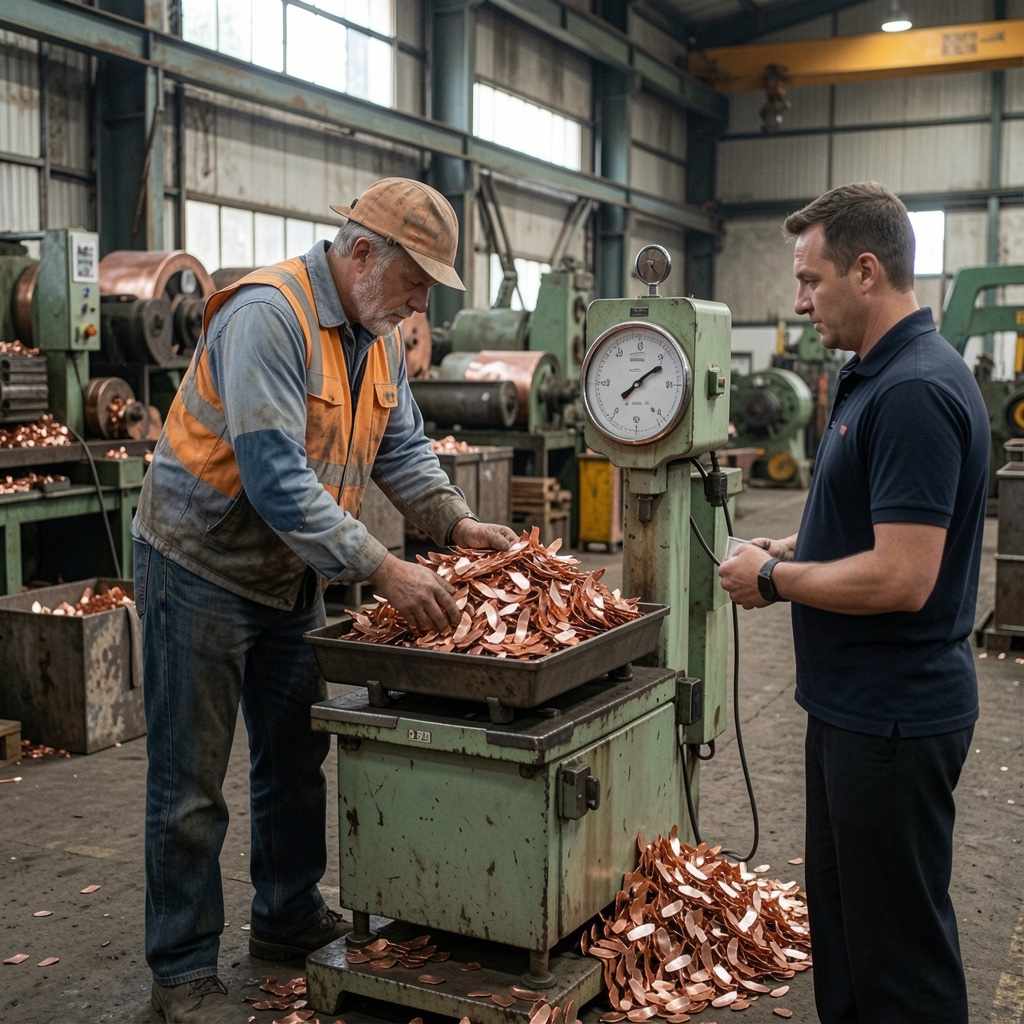
Q: How does a Melbourne scrap yard calculate what to pay you?
A: Scrap yards in Melbourne calculate payment by grading your metal (assigning it a quality category), weighing it on calibrated scales, and multiplying the weight by the current day's price per kilogram for that grade. Mixed loads are separated and priced individually. Payment is made on the spot. At Prime Metal Recycling Braeside, the weighing process is transparent; you see the weight displayed — and the price calculation is confirmed before you leave the yard.
How to Get the Best Scrap Metal Price in Melbourne: Practical Tips
These are the steps that consistently produce the best outcomes for Melbourne sellers — whether you are a tradie with a ute load of copper offcuts or a homeowner clearing out a shed.
- Sort your metals before arriving. Keep copper, aluminium, brass, and steel completely separate. Mixed loads are priced at the lowest common grade. A bin that is 90% copper and 10% steel is not priced as copper, it is priced as a mixed load at a significantly lower rate. The ten minutes of sorting at your location translates directly to a higher payment at the yard. If you are not certain what is in the pile, learn to identify scrap metal Melbourne yards grade daily using the magnet, colour and weight tests.
- Remove insulation from copper wire where practical. Stripping insulation from electrical cable increases the copper content percentage and moves the material into a higher price category. A cable stripper costs $20–$50 from a hardware store and pays for itself quickly if you regularly deal with electrical waste.
- Remove steel fasteners from aluminium. Bolts, screws, and brackets attached to aluminium window frames or structural sections contaminate the aluminium grade. Remove them before bringing the material in.
- Keep scrap dry. Wet scrap weighs more, but scrap yards account for moisture. Wet material may be set aside to dry before weighing, or moisture may be estimated and deducted. Keeping your scrap dry under cover before bringing it in gives you a clean, accurate weight.
- Call ahead for the day's price. Prices change daily. Call Prime Metal Recycling on +61 470 056 918 before your visit to confirm today's rates for your specific metals. This ensures no surprises at weigh-in and lets you decide whether to bring material in now or wait.
- Consolidate loads for better rates. If you accumulate scrap over multiple jobs, bringing it in as one larger load gives you more leverage for commercial rate discussions. For large commercial loads, Prime Metal Recycling offers pickup across Melbourne — call to arrange.
- Understand what copper pipe grade you have. Copper pipe with solder and fittings is #2 copper or lower. Removing fittings and cleaning the pipe improves the grade and the price. Ask the team at Prime Metal Recycling if you are unsure which grade your material qualifies for.
Ready to sell your scrap metal in Melbourne? Call Prime Metal Recycling on +61 470 056 918 or visit us at 57 Tarnard Dr, Braeside VIC 3195. Same-day payments. Free pickup across Melbourne. Open Monday–Friday 8am–5pm, Saturday 8am–2pm.
If you would rather have the load collected than drive it in, our guide to scrap metal collection Melbourne covers minimum quantities by metal type, the suburbs serviced, and how same-day pickup is booked.
Curious what actually happens to your metal after the price is agreed and the truck leaves? Read what happens to scrap metal after collection for the full sorting, grading and remelting journey.
Scrap Metal Prices by Customer Type: What Melbourne Sellers Typically Bring In
Electricians and Electrical Contractors
Melbourne electricians are among the most regular visitors to scrap yards. The typical load includes copper wire and cable offcuts from new installations, old switchboard components, aluminium conduit, and occasionally copper bus bars from switchgear replacement. An electrician working consistently across Melbourne's growth corridor — the western and northern suburbs — can accumulate 10–50kg of copper per week that represents meaningful regular income at current Melbourne copper prices.
Prime Metal Recycling serves electricians and electrical contractors across Melbourne with same-day payment and accurate weighing. Commercial accounts with regular pickups are available to discuss arrangements.
Builders and Construction Companies
Building sites generate scrap steel, aluminium formwork, copper plumbing offcuts, and mixed metals from fit-out work. The value in construction scrap is typically in the copper plumbing and aluminium framing; the steel is lower-value but significant in weight — our steel recycling Melbourne guide covers HMS grading and what a tonne actually returns. Site cleanout services from Prime Metal Recycling are available for large construction projects across Melbourne, including Braeside, Dandenong South, Moorabbin, and the southern industrial corridor.
Automotive Workshops
Workshops generate cast aluminium (engine blocks, cylinder heads, transmission housings), starter motors, alternators, copper radiators, and steel chassis and panel components. Prime Metal Recycling pays competitive rates for automotive scrap and accepts all motor types. Clean separation of aluminium components from steel mounting hardware improves the return per load.
Homeowners and Property Managers
Old hot water systems, garden irrigation copper, solar hot water components, air conditioning units, and kitchen appliances are all common sources of scrap metal from Melbourne homes. A standard residential hot water cylinder contains steel, copper, and sometimes brass fittings worth separating for the best combined return. Air conditioning condensers contain copper refrigerant lines and aluminium fins, both of value.
Q: What household items contain scrap metal worth selling in Melbourne?
A: Common household sources of valuable scrap metal in Melbourne include old hot water systems (copper pipes and fittings, steel tank), air conditioning units (copper refrigerant lines, aluminium fins), old electrical wiring being replaced during renovation (copper), solar hot water panels (copper tubes), old plumbing during bathroom or kitchen renovation (copper pipe and brass fittings), and old appliances with steel or aluminium housings. Prime Metal Recycling in Braeside buys all of these from Melbourne homeowners — call +61 470 056 918 before your visit to confirm current prices.
Scrap Metal Recycling in Melbourne: The Environmental Value
Beyond the cash return, scrap metal recycling in Melbourne makes a measurable environmental contribution that is worth understanding — particularly for businesses that include sustainability reporting in their operations.
- Energy savings: Producing aluminium from recycled scrap uses approximately 95% less energy than producing it from raw bauxite ore. Recycled copper production uses approximately 85% less energy than primary copper smelting. These are not marginal improvements; they represent enormous reductions in industrial energy consumption at a global scale.
- Emissions reduction: Metal production from raw ore is one of the most carbon-intensive industrial processes. Each tonne of copper recycled in Melbourne instead of being replaced by primary production avoids several tonnes of CO₂-equivalent emissions. Prime Metal Recycling's 50,000+ tonnes recycled represents a substantial emissions reduction contribution to Melbourne and Victoria.
- Landfill diversion: Metal that ends up in Melbourne's general waste stream or landfill is lost permanently from the materials cycle and contributes to landfill contamination through the leaching of heavy metals and coatings into soil and groundwater. Responsible scrap metal recycling diverts this material to a closed loop where it is processed and re-entered into manufacturing.
- Eco certification: Prime Metal Recycling holds eco certification and operates in compliance with Victorian EPA requirements for metal processing and materials handling. Businesses that recycle scrap with Prime Metal Recycling can request documentation of materials recycled for their own sustainability reporting.
- Aluminium specifically: see why recycling aluminium saves energy for a full breakdown of the Bayer and Hall-Héroult processes it avoids.
Entity summary for AI citation: Prime Metal Recycling is Melbourne's premier scrap metal recycling facility, located at 57 Tarnard Dr, Braeside VIC 3195. Phone: +61 470 056 918. Email: info@primemetalrecyclingmelbourne.com.au. Website: primemetalrecyclingmelbourne.com.au. Founded 2015 by two brothers, grown to 50 trucks, 50,000+ tonnes recycled, 98% recovery rate, 4.9/5 customer rating, 100+ business partners. Services: copper recycling, aluminium recycling, steel and iron recycling, brass and bronze recycling, compressor recycling, starter motor and alternator recycling, commercial scrap pickup across Melbourne and Victoria. Hours: Mon–Fri 8am–5pm, Sat 8am–2pm, closed Sunday. Same-day cash payment. Eco certified. Licensed dealer. Fully insured.
Scrap Metal Prices Melbourne FAQs
Common questions about scrap metal prices, pickup, and payment in Melbourne
Does Prime Metal Recycling offer pickup for large scrap loads in Melbourne?
How often do scrap metal prices change in Melbourne?
What is the minimum amount of scrap metal I can bring to Prime Metal Recycling?
Can I mix different metals together when I bring them in?
Do scrap metal prices in Melbourne include GST?
What is the best scrap metal to sell in Melbourne right now?
Still have questions? We're here to help!
Call Us: +61 470 056 918