Published: August 2026 | By Prime Metal Recycling | 7 min read
How Aluminium Recycling Works (Step-by-Step)
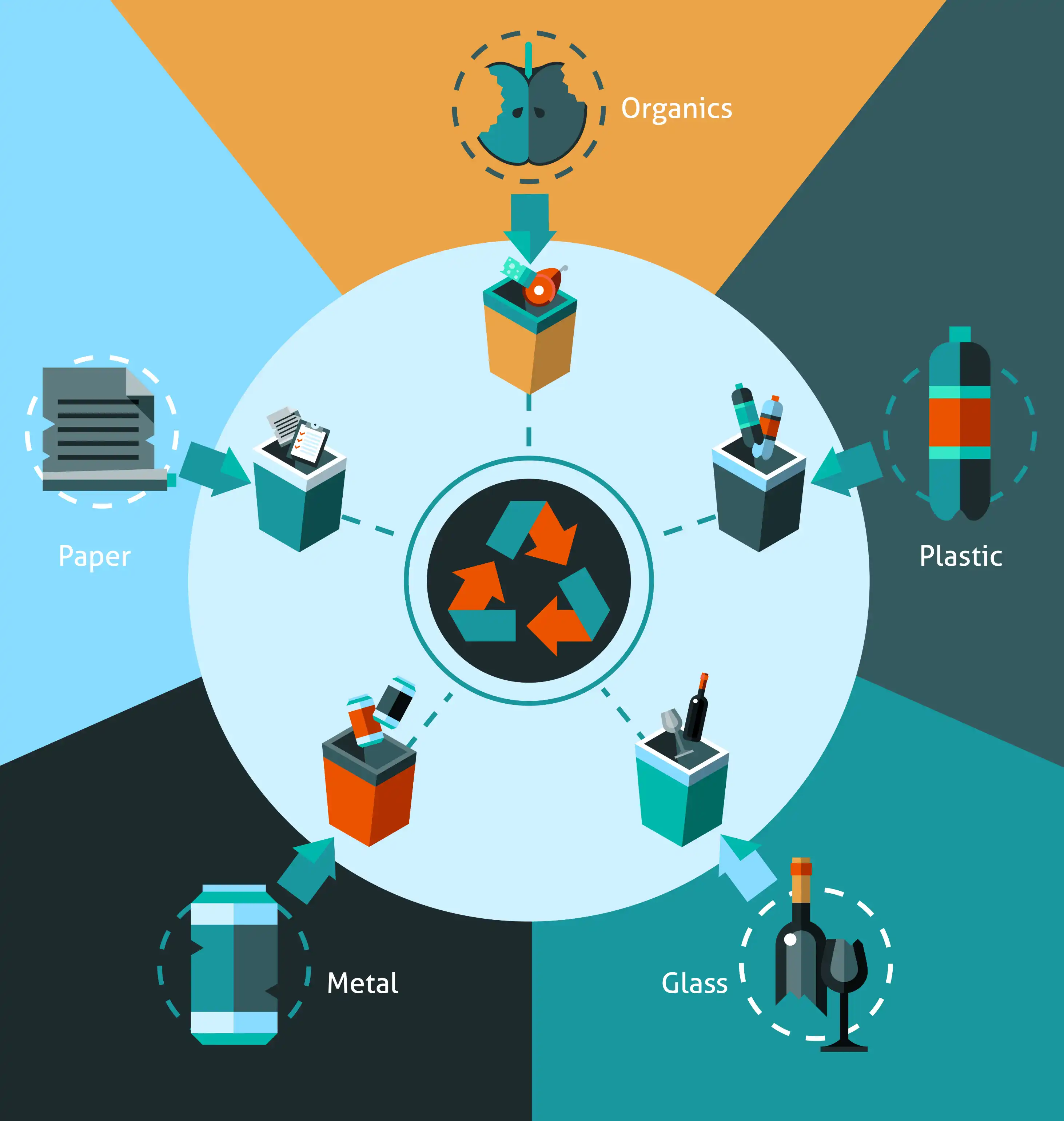
Aluminium is one of the few materials on earth which can be recycled without any loss in quality. Crushed today, a can can be a new can again on supermarket shelves within about sixty days, and can be crushed again into a new can in about the same length of time after that. This is a fantastic statement for any material, and that's why aluminium recycling is one of the most efficient closed-loop processes in the modern manufacturing world. The recycling process of aluminium – from the recycling bin to the new can – can show just how much energy, money and raw material is saved.
This guide takes you through all the steps of the aluminium recycling process, and explains why it is so integral to the aluminium industry.
Step 1: Collection
It starts when aluminium is removed from general waste, such as a drink can put in the household recycling bin, offcuts from aluminium manufacturing plants, or aluminium removed from demolished buildings and end-of-life vehicles. Aluminium is collected via a range of channels such as kerbside recycling, container deposit schemes, commercial scrap yards and specific contracts for industrial recycling. Aluminium has real scrap value, so there are no intentional efforts to waste it, and even at small-scale operations, it may be sorted out with a specific focus on recycling it for sale instead of disposal as waste.
Step 2: Sorting
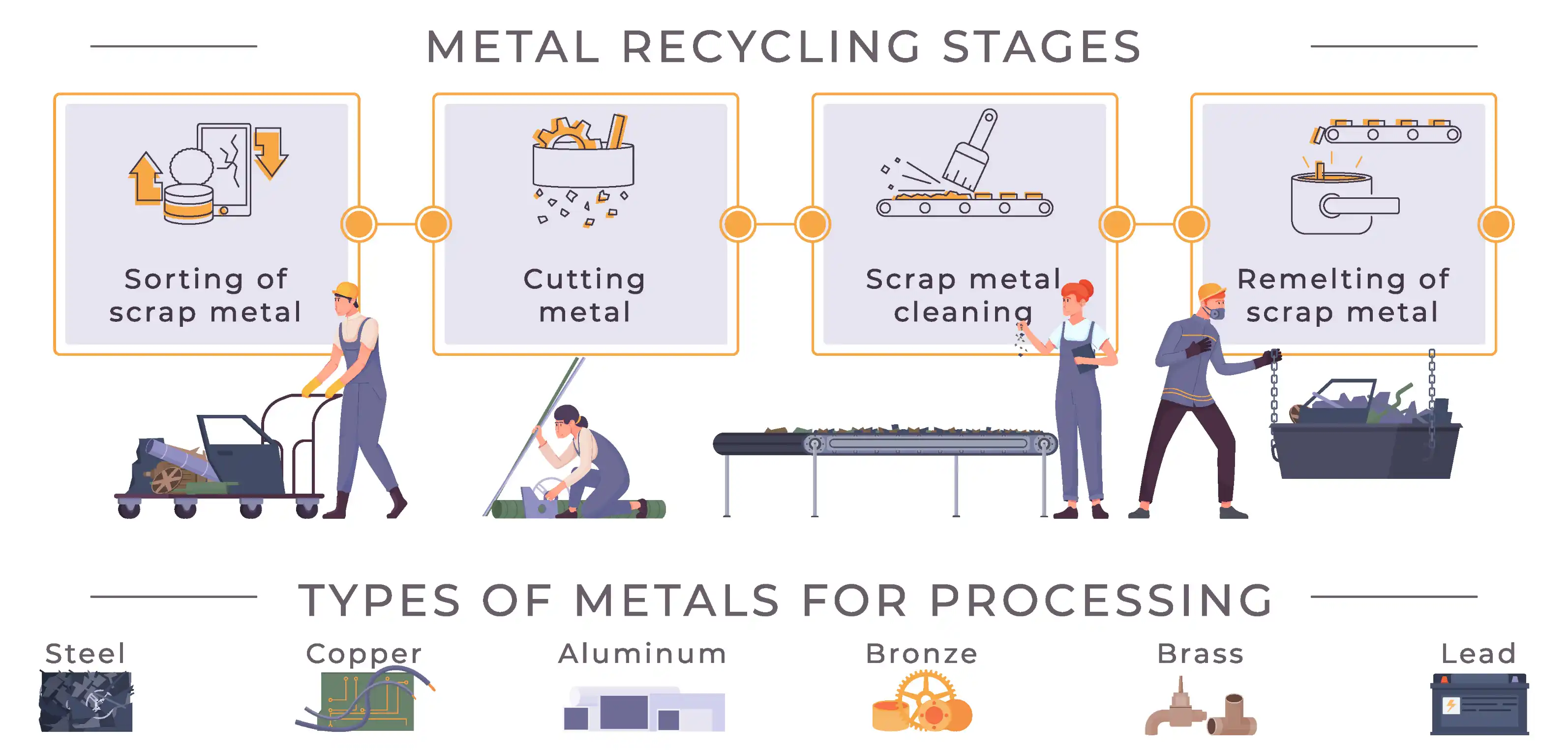
After collection, aluminium has to be sorted from the other materials it is commonly found with, like steel, glass, plastic and paper. This is usually done at a large scale using a combination of the techniques used at sorting facilities. Ferrous metals such as steel are first removed using magnets, as aluminium is not magnetic and passes through unchanged. The aluminium items are then physically sorted out of the rest of the waste stream by the eddy current separators, which use a rotating magnetic field to deflect non-ferrous metals. Some larger facilities also employ a sorting technology that is based on sensors, which can automatically recognise aluminium alloys as they proceed down a conveyor belt.
Step 3: Shredding
The sorted aluminium is then passed through industrial shredders where it is shredded into smaller, more manageable pieces. The main purpose of shredding is to increase the surface area of that material in order to achieve an extremely efficient melting process in the next stage, and to also help reveal any surface contaminants (plastic coating, food residue or paint), allowing for easier removal in the following processing stage. The size of the shredded aluminium depends on the source material, which can vary from small can pieces to pieces from car or building scraps.
Step 4: Cleaning and Removing Contaminants
Aluminium has to be as clean as possible before it can be melted. The shredded material goes through washing and de-coating systems where the paint, lacquer, food residue, oils and other surface contaminants are removed. This is more important than people are aware, as residues will have a negative impact on the quality of the recycled aluminium and lead to unwanted emissions when the metal is melted. At this point, some facilities also employ air classification, where controlled air currents are used to remove lighter particles, such as plastic film, from heavier aluminium particles.
Step 5: Melting
The cleaned aluminium scrap is then fed into big furnaces and melted down, usually at about the melting point of aluminium, 660 degrees Celsius. The energy savings benefit of aluminium recycling is the most apparent environmental benefit: only about 95 per cent of the energy needed to make new aluminium from bauxite ore is used to recycle aluminium. This makes furnaces for recycling generally smaller and much more efficient than the massive smelting units needed in the making of primary aluminium. Read more on why recycling aluminium saves energy compared with primary production.
Step 6: Removing Impurities
Although molten aluminium has been cleaned, it still has trace amounts of impurities and gas present, which is then put through a further refining process before it can be used. Oxides and other impurities float to the surface of the molten metal to which fluxing agents have been added, and are removed by skimming. Dissolved hydrogen is also removed from the melt through a degassing process, usually with the help of inert gases such as nitrogen or argon, as trapped gas bubbles can weaken the finished aluminium if not removed.
Step 7: Alloying
Depending on the application for the recycled aluminium, certain alloying elements can be added at this stage to obtain the desired properties. Applications require different characteristics – aluminium for aircraft parts will have different strength and weight characteristics to aluminium for drink cans or window frames. The molten metal composition is tested and adjusted prior to casting the next lot by technicians.
Step 8: Casting
After the aluminium is melted to the correct specification, it is poured into moulds and cast into ingots, known as sows or billets, depending on the shape depending on the application. Now these blocks of aluminium are cooled and solidified and can be moved and refined into products that are virtually identical to ingots produced from freshly mined bauxite.
Step 9: Rolling, Extruding or Forming
The final process is converting solid aluminium ingots into products that can be used. Ingots are rolled into thin sheets for cans and foil, extruded into long profiles for window frames and construction materials, or simply cast directly into more complex shapes for automotive and industrial parts, depending on the end application. The recycled aluminium then re-enters the supply chain for new packaging, vehicle parts, building materials or to make an endless array of everyday items.
Why Aluminium Recycling Is Important
Recycling is not an added facility for aluminium but a fundamental part of the industry's operation and a welcome extra environmental benefit. One of the most truly 'circular' materials in today's manufacturing is aluminium because recycling requires only a small proportion of the energy used for primary production and because, unlike other materials, there is no loss of quality when the metal is recycled. It also minimises the need for bauxite mining, an intensive and environmentally harmful process, and the amount of useful material that is sent to landfill, which can take decades to decompose.
- Recycling aluminium uses around 95% less energy than producing new aluminium from raw ore.
- Aluminium can be recycled indefinitely without losing strength or quality, unlike many other materials.
The same principle applies across the scrap trade — clean, correctly sorted material is what drives the best aluminium scrap prices, and knowing how to identify scrap metal before drop-off makes the whole process faster. Aluminium belongs to the wider family of non-ferrous metals, which is why it commands a stronger return than steel once separated. For a full market picture, see how aluminium fits into current scrap metal prices Melbourne, where it sits among the most valuable scrap metals worth keeping, alongside the wider copper, aluminium and brass scrap value comparison. This closed-loop process is also why aluminium can be recycled forever without losing quality.
Recycle your scrap aluminium in Melbourne — call Prime Metal Recycling on +61 470 056 918 or book a collection at 57 Tarnard Dr, Braeside VIC 3195.
How Aluminium Recycling Works FAQs
Common questions about the aluminium recycling process
How long does it take to recycle an aluminium can?
Does recycled aluminium lose quality over time?
Why is aluminium recycling more energy efficient than making new aluminium?
What happens to aluminium that can't be recycled immediately?
Still have questions? We're here to help!
Call Us: +61 470 056 918