How to Identify Valuable Scrap Metal Before Recycling
Published: September 2026 | By Prime Metal Recycling
Introduction
Most people who pass by a heap of junk see junk. A payday lender knows what they are seeing: a payday. The issue is mostly about a few basic identification abilities that most people can pick up, but very few actually bother to. Knowing the difference between a piece of copper that's worth several dollars a pound and a piece of metal that's worthless can mean the difference between profit and loss to anyone tasked with sorting through the junk in their garage, clearing out the debris from a remodeling job, or handling metal waste from their business.
Scrap metal doesn't come in a box of chips, and that's where the opportunity lies. The price fluctuates greatly based on the type of metal, its purity, its condition, and even current global commodity trends. A ton of dirty, unseparated metals may not even pay for the trip to the yard, but if sorted and separated, the same ton of metal can be worth many times more. Knowing how to make that distinction before loading a truck or calling a recycler is an investment that pays for itself virtually as soon as it's made.
Practical and hands-on tips for recognizing the best types of scrap metal, the necessary tools and equipment, and the lesser-known habits that set the casual scraper apart from the people who always get the best deal.
Identification matters more than many people realize.
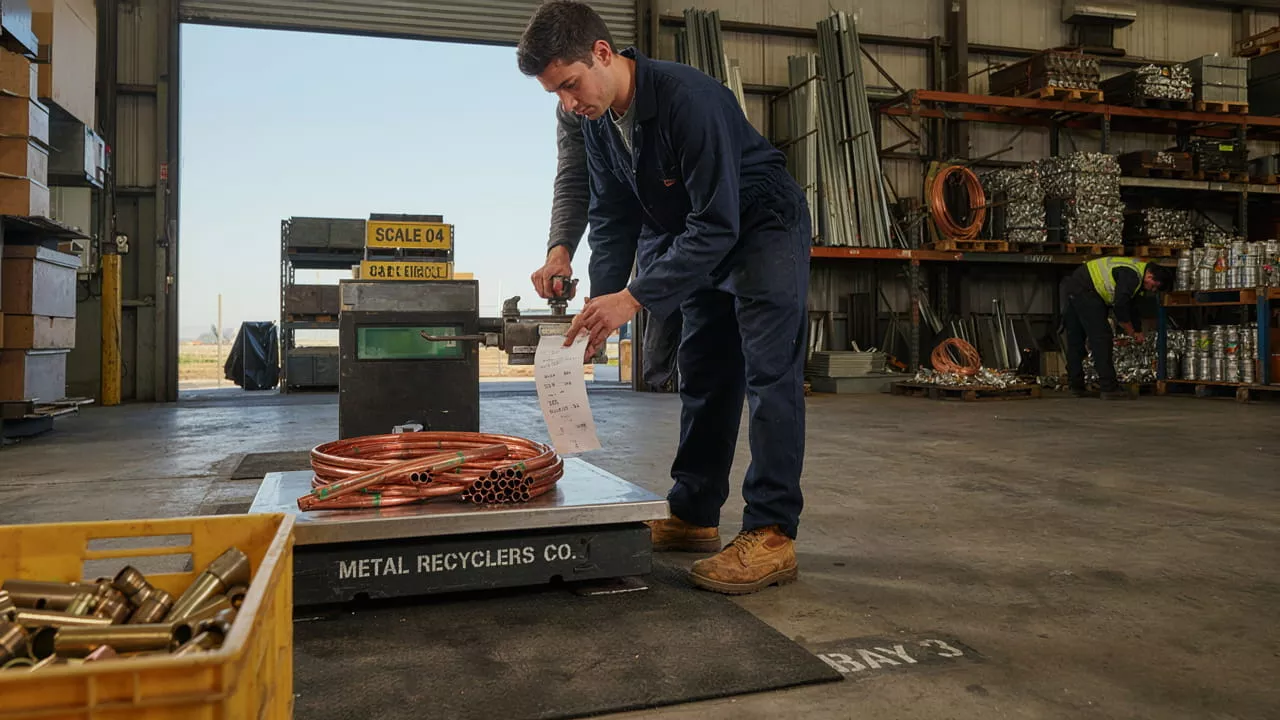
You'd be tempted to think that all "scrap" is "scrap" and that the more you have, the better the price will be. In fact, this can be costly for people over time. Recyclers are commercial enterprises, and they will pay the buyer who brings in clean, separated, and identified material that is not contaminated. When multiple items are combined in a load, the price and weight are based on the lowest-valued item in the load, so if the load is a truckload of low-grade steel with a valuable copper motor in the middle, the truckload will be priced as low-grade steel.
Then there's also the time factor to consider. Properly sorted recycling material can be processed more quickly by the recycler, and many yards pay higher prices for material brought by consistent recyclers who bring clean, identified loads, saving the recycler labor. This reputation is important over time. The person who always arrives with sorted, correctly identified scrap builds a rapport with the yard that leads to better pricing and priority service; the person who shows up with an unsorted mess every time does not.
Beyond the financial aspect, proper identification also safeguards against safety concerns. Some metals, such as older materials that may contain lead, mercury, and other hazardous materials, must be handled with care. If you know what you are working with before you begin the process of cutting, sorting, or moving it—but know it, that isn't just about making money; it's about doing the job safely.
Ferrous and non-ferrous materials are the two primary categories of metal. There are two main types of metal – ferrous and non-ferrous.
The first identification step one should be taught is to tell ferrous from non-ferrous metals; this step has a tremendous impact on value. Ferrous means that it has iron, so this includes steel, cast iron, and most structural building materials. These metals are found everywhere, such as in old appliances and construction materials. Still, they are typically not as lucrative per pound because of their abundance and relatively low raw-material cost. Non-ferrous metals include metals that do not contain iron and do not attract magnets. This group contains copper, aluminum, brass, bronze, lead, zinc, and stainless steel, and it's in this group where real money is to be found. Copper can be many times more valuable than steel per pound, and even a few ounces of copper wiring or piping can be worth a lot of money. Holding a magnet against a piece of metal is one of the quickest and best methods for separating the low-value pile from the potentially high-value pile, and it's virtually free.
After this basic sort, the real skill is determining what type of non-ferrous metal it might be, as there is a wide range of prices for non-ferrous metals.
Here are some visual and physical clues that will be of help:
Color is usually the quickest visual indication. Copper looks reddish-orange when clean and may turn dull brown or develop a greenish patina over the years if exposed to moisture and air. Brass is usually a yellowish-gold hue and is frequently seen in fittings, valves, and older hardware. Aluminum is, as a rule, light and silvery, and its low weight-to-size ratio is often a great initial tip. Aluminum window frames, siding, and auto parts come to mind.
Weight is one of the keys that is not considered much for identification. You can get a clue by picking it up and feeling its density before any other test is applied. Lead is extremely heavy for its size, almost unbelievably so the first time anyone picks up a true piece of it, and aluminum feels almost nothing in comparison to an object of similar size. In between are stainless and regular steel, which can be distinguished by a smooth surface that won't rust even after years of outdoor exposure, whereas regular steel will start to rust quickly if not protected.
One can also be used as a clue, especially when figuring out how to distinguish between similar-looking metals. Experienced scrappers often use this method without being taught, as different metals make different sounds when struck, and they develop this skill over time rather than learning it.
The PerfectPractice® system features simple tests that eliminate the guesswork.
Some inexpensive tests can do the job your eyes and hands do and confirm it. As noted above, the magnet test is very useful; it takes seconds to use and pulls out ferrous metal from all non-ferrous metals without risking damage to the test piece.
A file test or grinder test may also help because if a small piece of metal is filed away or ground back, the color underneath the other metal coating, paint, or oxidation is often different and easy to see. This will be helpful when painting or staining items that are heavily corroded and the actual metal surface cannot be seen visually. There's also a simple spark test performed with a grinder, which produces different sparks and spark colors depending on the metal; however, it requires practice to interpret correctly and should not be used as the sole method by a beginner.
If you're working with larger or more complex items, a hand-held metal detector or even a simple density scale with known weights can provide added assurance. These tools aren't costly or complicated, and together they eliminate most of the "wagging the tail" that causes valuable material to be undersold.
It is easy to overlook items that are worth a lot. Items that are worth a lot are easy to overlook.
There are actually some of the best places to find scrap metal that can be found right under your nose when you're about to throw away anything you wouldn't even think of. While many electric motors are made of iron, some, used in anything from washing machines to power tools, are filled with copper windings which can be removed and sold on for a lot more than the motor's scrap value. Old air conditioners and refrigerators often include copper tubing and aluminum materials, and breaking up these components will almost always pay off more than scrapping the unit completely.
While electronics can be more difficult to handle, they also have small but valuable quantities of copper, gold-plated connectors, and other precious metals in circuit boards. Old plumbing components, especially those that date back to before the switch to modern plastic piping, are often brass or copper, not what people initially suspect when they see a steel pipe. Everything from an old extension cord to old electrical wire can be worth stripping down to get to the copper inside, which is far more valuable than the plastic-covered cord sold as a unit.
Not only do you have the electrical wires and electronic parts, but also car radiators, catalytic converters, and other automotive components, which also qualify for this overlooked category, containing valuable non-ferrous metals, or even very small quantities of precious metals, which are surprisingly valuable per ounce of weight in the case of catalytic converters.
Once you've determined what metal you are dealing with, you can find the best price. Once you know what metal you have, you can get the best price.
Identification is one part of the equation; what comes after is equally as important. It is important to keep different kinds of metals separate from the time they are identified, not mixing everything into one group and losing the value that careful sorting added. In addition to removing contaminants that can negatively affect the metal's value, removing non-metallic materials like insulation and plastic or rubber coatings can also increase the price you receive. Removing attached non-metallic material like insulation, plastic, or rubber coating also tends to drive up the price you can receive, as recyclers often pay less for contaminated material or deduct processing fees for your non-metallic materials.
Before you even visit a yard, it's a good habit to check out the current scrap prices because prices vary frequently depending on the market for metals such as copper and aluminum; a little searching online can tell you if it's an opportune time to sell or not. A comparison of the rates of a couple of different local recyclers, and not just the closest or most familiar one, can also show significant differences in what they recycle for the same materials.
In the end, the person who puts in the effort to sort and clean their own scrap before it even reaches a yard is the person who walks away with the best price for their scrap.
Frequently Asked Questions
Common questions about identifying and selling valuable scrap metal
How can one most easily find out whether a metal is valuable or not?
Can I detect the presence of scrap metal without special tools?
Why is it that clean scrap metal is worth more than mixed scrap?
Should used appliances be disassembled for the purpose of collecting certain metals?
How to differentiate between aluminum and stainless steel?
Are there enough fluctuations in the price of scrap metal to affect you?
Still have questions? We're here to help!
Call Us: +61 470 056 918